
▶ TL;DRThe Witcher 3: Wild Hunt Remastered is a 10 because its quests, from the Bloody Baron down to a stolen frying pan, are the best written I've played in an RPG. The combat is still floaty and the remaster's PC launch needs more patches. The game includes both expansions now, so this is the time to start.
The Witcher 3: Wild Hunt came out in May 2015, and I still measure every open-world RPG against it. Most of them lose. CD Projekt Red wrote a game where a notice-board job about a stolen frying pan gets the same care as the main plot, and eleven years later I haven't played another RPG that manages it.
It's also back in the news. On 29 September 2026 CD Projekt Red and co-developer Yigsoft released a free Remastered update, and Steam now sells the game under that name for A$69.99 (A$34.99 on sale as I write this) with both expansions included. So this is a review of The Witcher 3: Wild Hunt Remastered, an eleven-year-old game in the state you can buy it today. It's a 10.
You play Geralt of Rivia, a monster hunter for hire, looking for his adopted daughter Ciri before the spectral riders of the Wild Hunt reach her. The search runs through a war-wrecked swamp called Velen, the free city of Novigrad and the Skellige isles, and Doug Cockle's dry, tired Geralt holds all of it together.
Side quests written like the main one
The Bloody Baron is the quest everyone brings up, and it earns the reputation. Phillip Strenger is a drunk warlord in Velen who knows where Ciri went and won't say until Geralt finds his missing wife and daughter. The search turns up why they left. By the end I knew exactly what the Baron had done to his family, and the game still made me feel for him, which I resented a little.
The game never tells you which choice is right. A decision I made about a spirit trapped under a tree came back later in the Baron's story, with no warning and no way to take it back. The Witcher 3 does this constantly.
Decisions pay out hours later, usually in a way that only makes sense in hindsight.
The small jobs get the same treatment. An old woman's missing frying pan turns into a spy story in about ten minutes. I stopped sorting quests into main and side early on, because the writing doesn't.
+ PROS
- Side quests written with the same care as the main story
- Choices pay out hours later, with no warning
- Monster contracts that play like detective cases
- Velen, Novigrad and Skellige each feel like a different country
- Hearts of Stone and Blood and Wine now included for every owner
− CONS
- Combat still feels floaty, and the lock-on picks the wrong enemy in groups
- Inventory fills with junk and gear still needs repairing
- Skellige's sea is littered with repetitive loot markers
- The remaster launched with AMD graphics glitches and performance complaints on PC
- Reforge transmog is locked to two master craftsmen
Contracts are detective work
Witcher contracts are the activity I'd keep if I could only keep one. A village posts a notice, Geralt haggles over the fee, and then you work the case. You follow tracks and inspect bodies with witcher senses until Geralt names the monster, and the bestiary tells you which oil goes on the silver sword and which sign the thing hates.
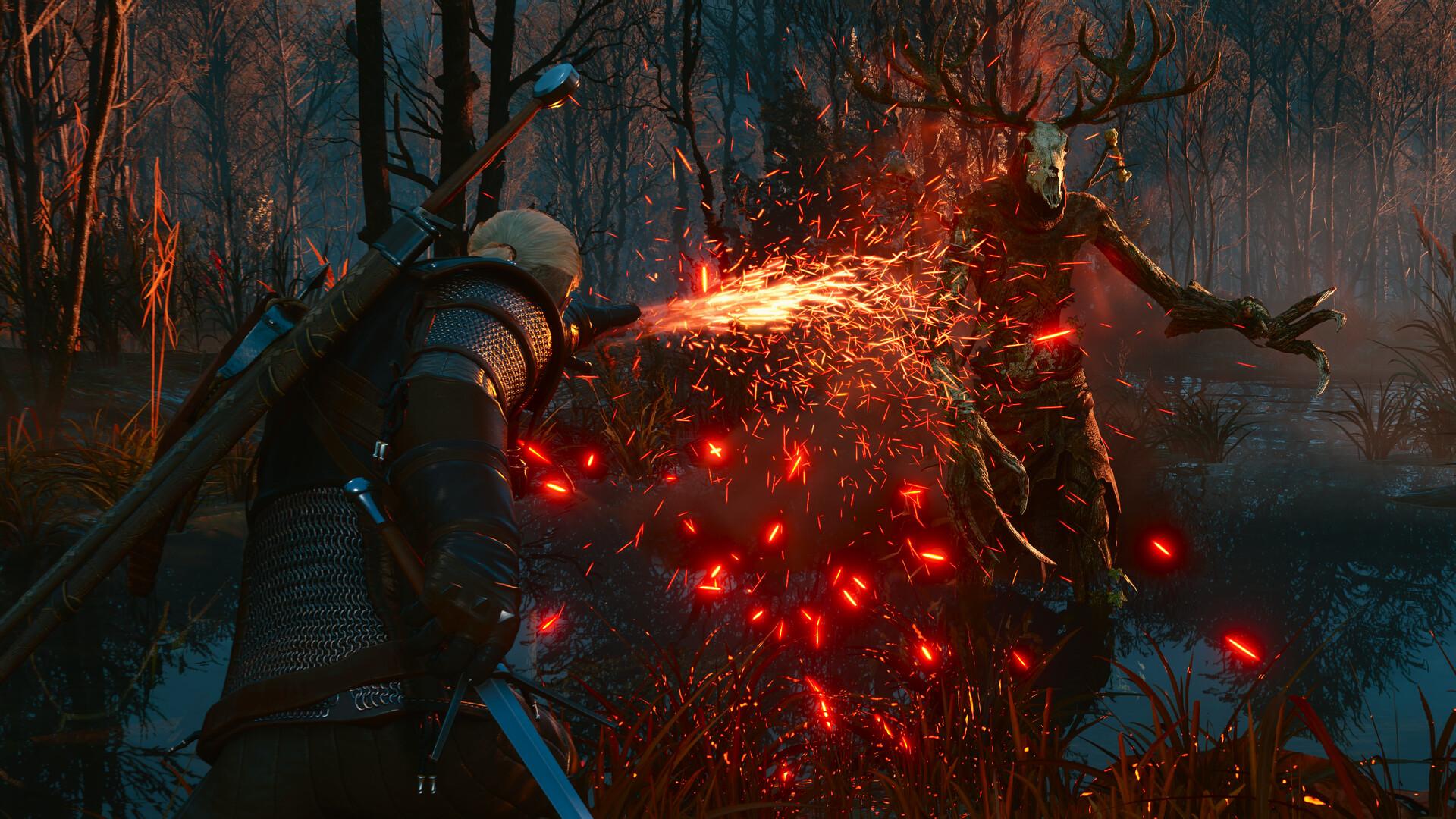
The fights are better for the homework. A leshen in a swamp is frightening when you walk in blind and manageable once you've brewed the right potions. A good number of contracts also end with a twist about who the real monster was, or who deserves the coin.
A map I'd rather ride than fast travel
Velen is mud and hanged men, with villages the war has rolled over twice. Novigrad is a crowded port where the Church of the Eternal Fire burns mages in the square. Skellige is a cold island chain of longships and blood feuds. Each region has its own politics and its own music, and Marcin Przybyłowicz's score, heavy on folk vocals, is a big part of why I remember them as places.
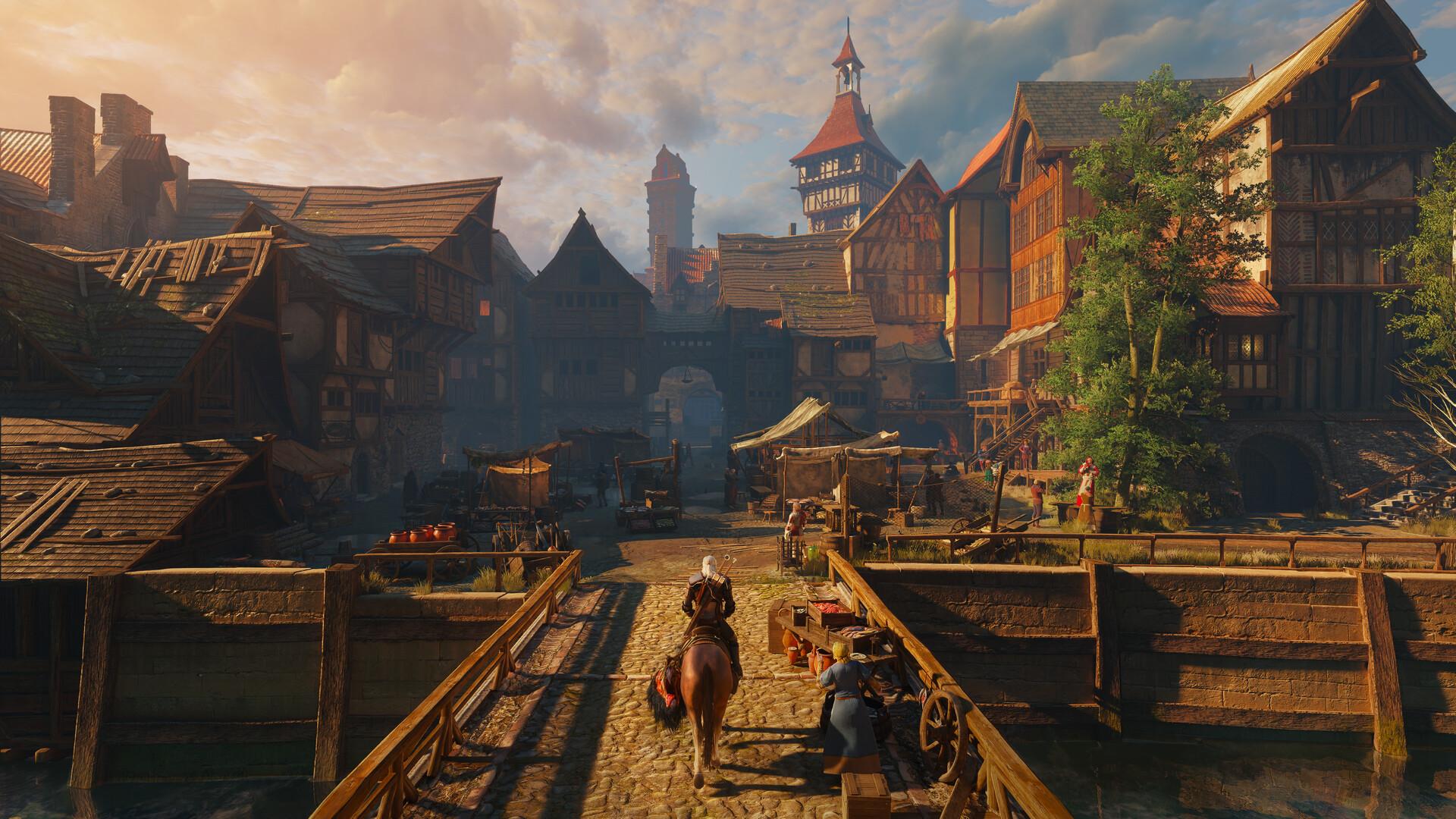
Then there's Gwent, the card game every innkeeper and blacksmith plays. It starts as a tavern distraction and turns into its own collection quest, with rare cards held by players scattered across every region. I'd take a round of it over most of the minigames in other RPGs.
The fighting was always the weak part
A 10 still has cons, and here they are. Combat is the weakest thing in The Witcher 3 and always has been. Geralt has a fast attack, a strong attack, a dodge, a roll and five magic signs, which reads fine on paper. In the hand, swings feel floaty, the lock-on wanders to the wrong enemy in a group, and most fights against humans come down to casting Quen and stepping sideways.
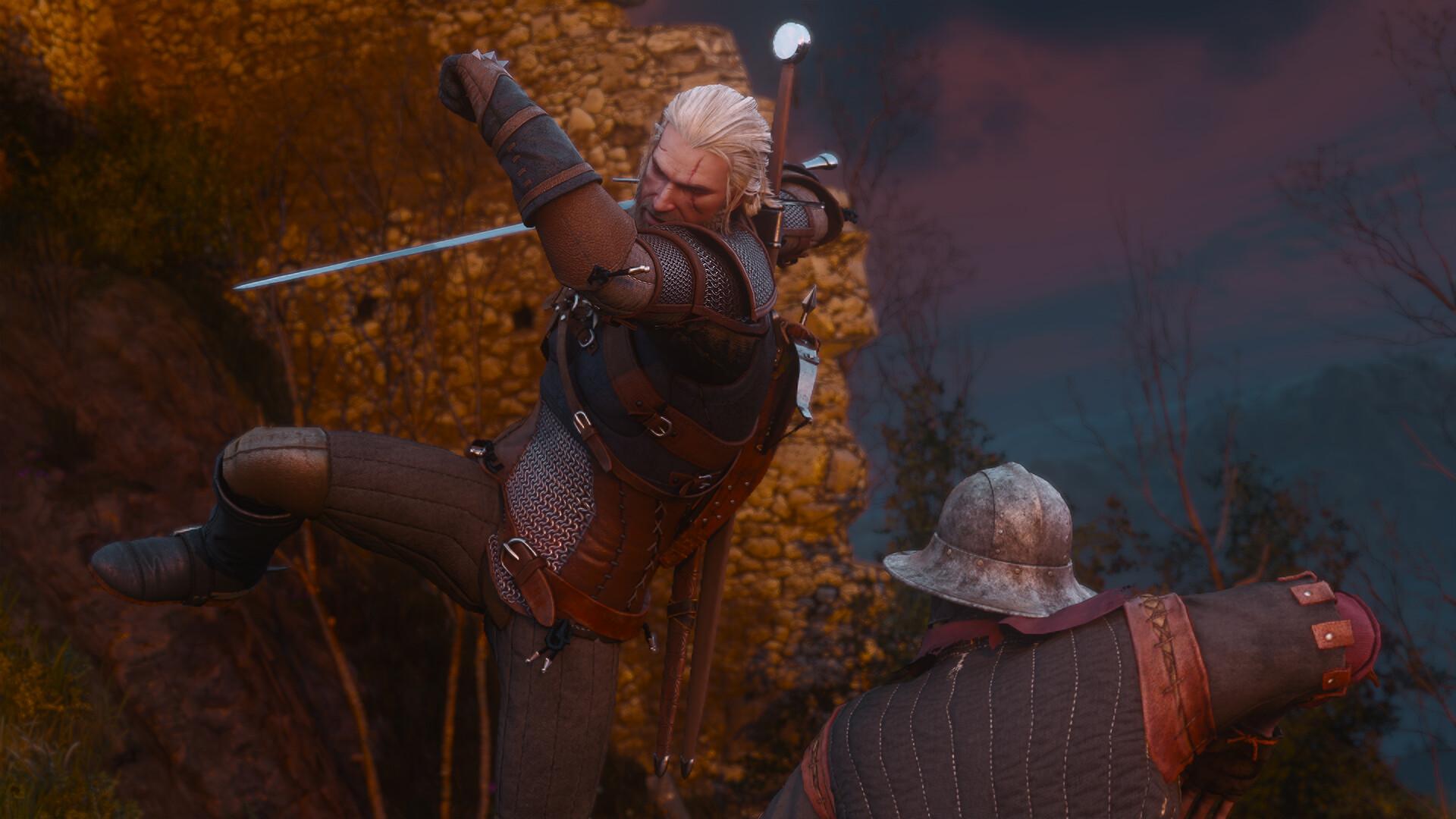
The clutter doesn't help. Geralt's bags fill with herbs and crafting scraps you'll never use, and swords wear down until you pay someone to repair them. Skellige's sea is carpeted with question marks, and most of them mark a floating crate of loot with sirens circling it.
What the remaster changes
The Remastered update is free if you own any version, and its patch notes run long. The skill screen is now a tree where each skill has three ranks and unlocks through prerequisites. The notes also list faster climbing and vaulting, better target-lock switching and reworked attack patterns for non-boss monsters. You can loot from the saddle. There's a transmog system called Reforge too, though only the two master craftsmen offer it, so it arrives mid-game.
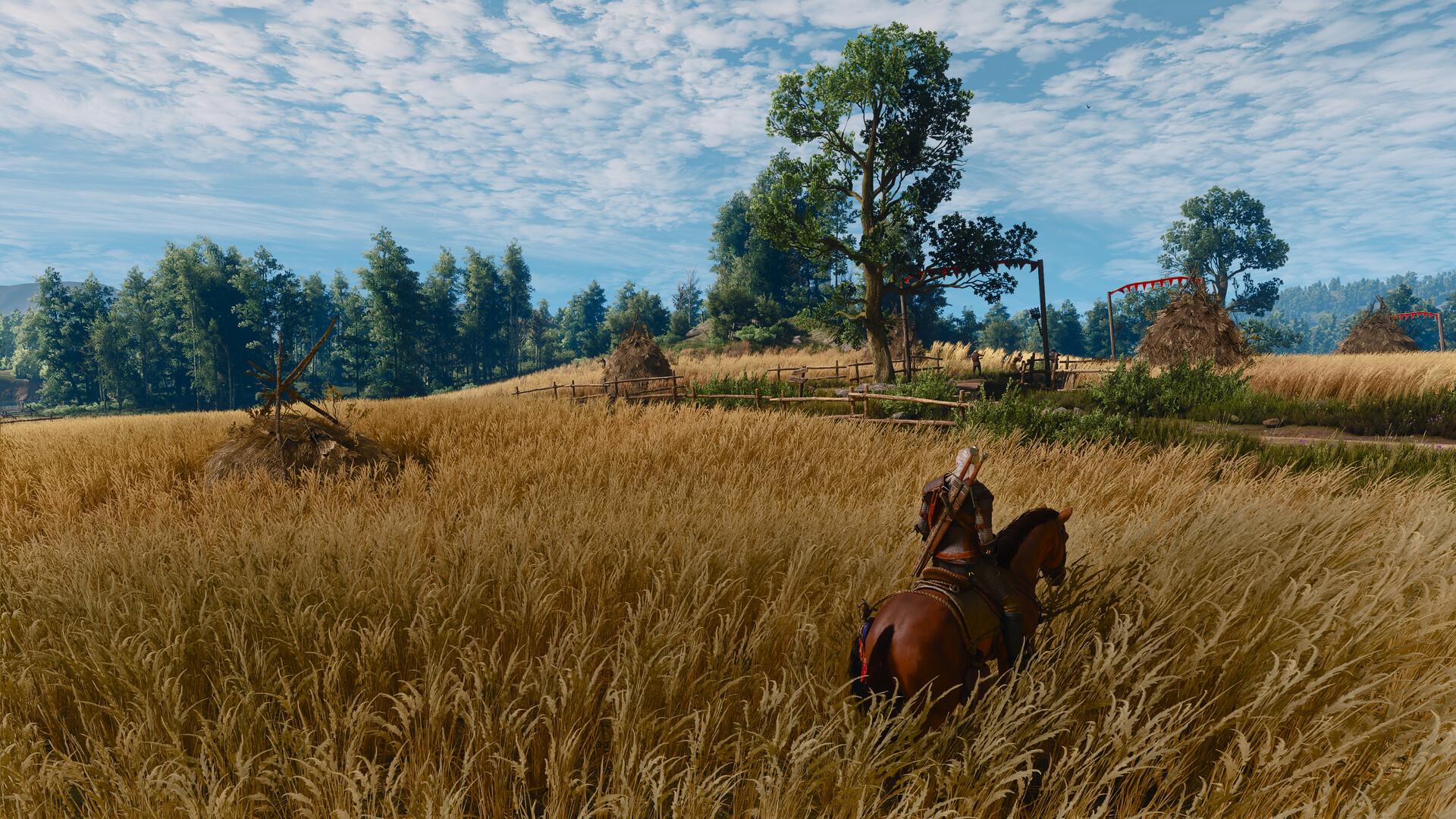
I'm writing this three days after launch, so treat the rest of this section as a snapshot. Push Square gave the PS5 version 10/10 and says Geralt now stops when you let go of the stick, while finding the combat changes less prominent. Cubed3 gave the PC version 8/10 and still calls the fighting floaty. So the combat is better, and it's still the weak part.
PC is the rough spot. The update launched with graphical glitches on AMD Radeon cards, which AMD patched with a new driver within hours, and TheGamer counted more than 2,000 negative Steam reviews in the first three days. CD Projekt Red's hotfix 5.00c on 2 October fixed quiet voice audio, adjusted the bloom in Velen and reverted a HairWorks change. If the remaster runs badly on your machine, Steam lets you switch back to the next-gen or classic build from the game's properties. Console players don't get that option.
Two expansions, now in the box
Hearts of Stone and Blood and Wine used to be paid add-ons. Since the remaster, every owner has both. Hearts of Stone is a tight deal-with-the-devil story built around Gaunter O'Dimm, who is the most unsettling villain in the series for me.
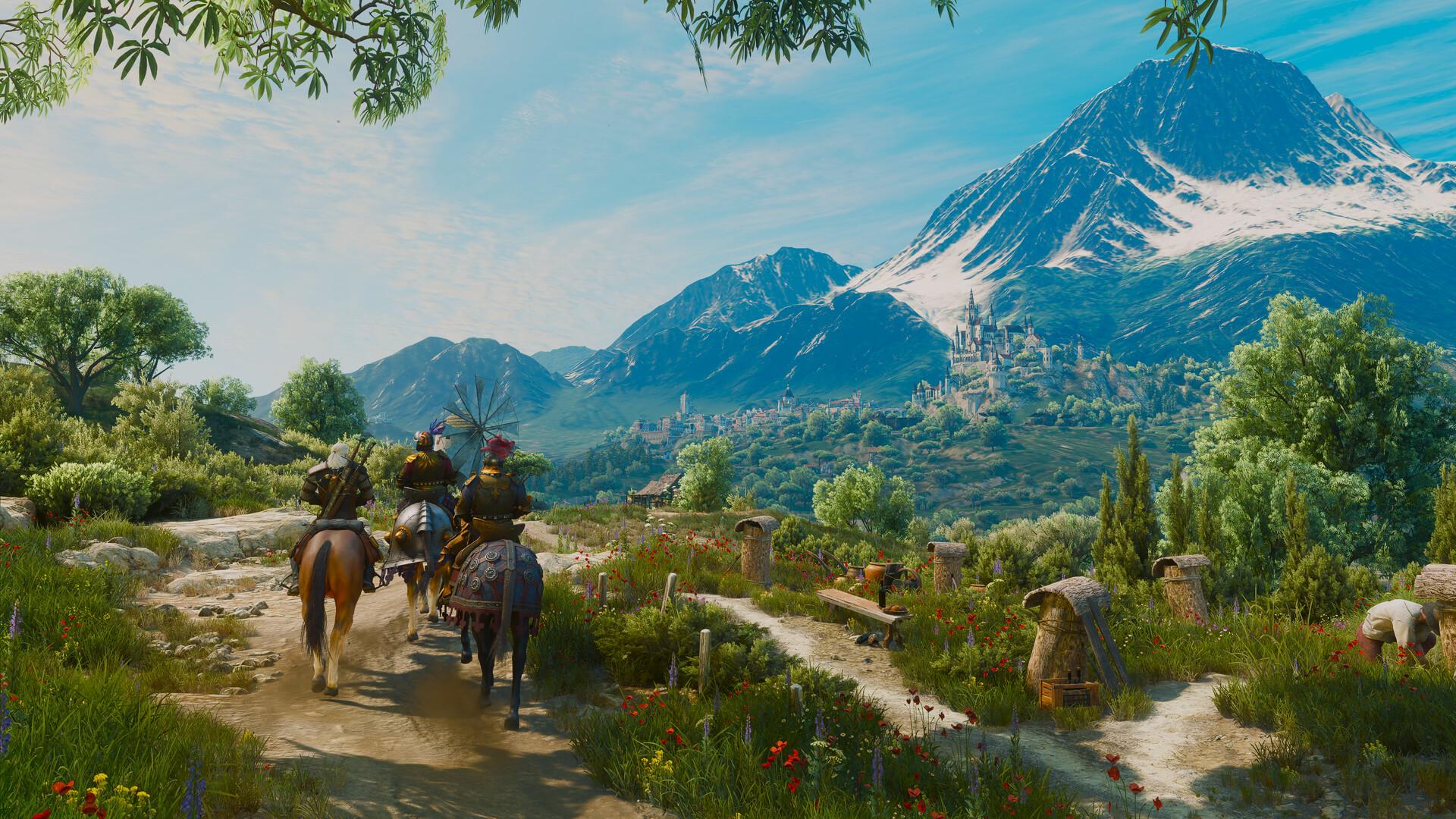
Blood and Wine sends Geralt south to Toussaint, a sunny duchy of vineyards and tournament knights with a vampire problem, and gives him a vineyard of his own to come home to. It's a new map with its own main story, and it won Best RPG at The Game Awards 2016 as an expansion.
A third expansion, Songs of the Past, is due in 2027. CD Projekt Red is co-developing it with Fool's Theory, it's set in a new region called Letten, and it will be a paid release.
Watch the trailer
Verdict
The Witcher 3: Wild Hunt Remastered gets a 10 from me because of its writing. It treats a peasant's problem and a king's problem with the same seriousness, and its choices come back when you've stopped watching for them. The combat was the weak part in 2015, and the remaster improves it without fixing it. I don't care. If you're on PC, check how the remaster runs on your card and fall back to the older build if you need to. If you've never played it, the game includes both expansions now and a new one arrives in 2027, so this is a good week to start.
PLAYER COMMENTS
LOADING...