▶ TL;DRCombolands is a combo puzzle with citybuilder art, and a very good one. It's too easy at the top ranks and slow to open up, but the guild pairings and heirlooms make every half-hour run worth starting. At A$13.95 it's an easy buy for anyone who liked Balatro.
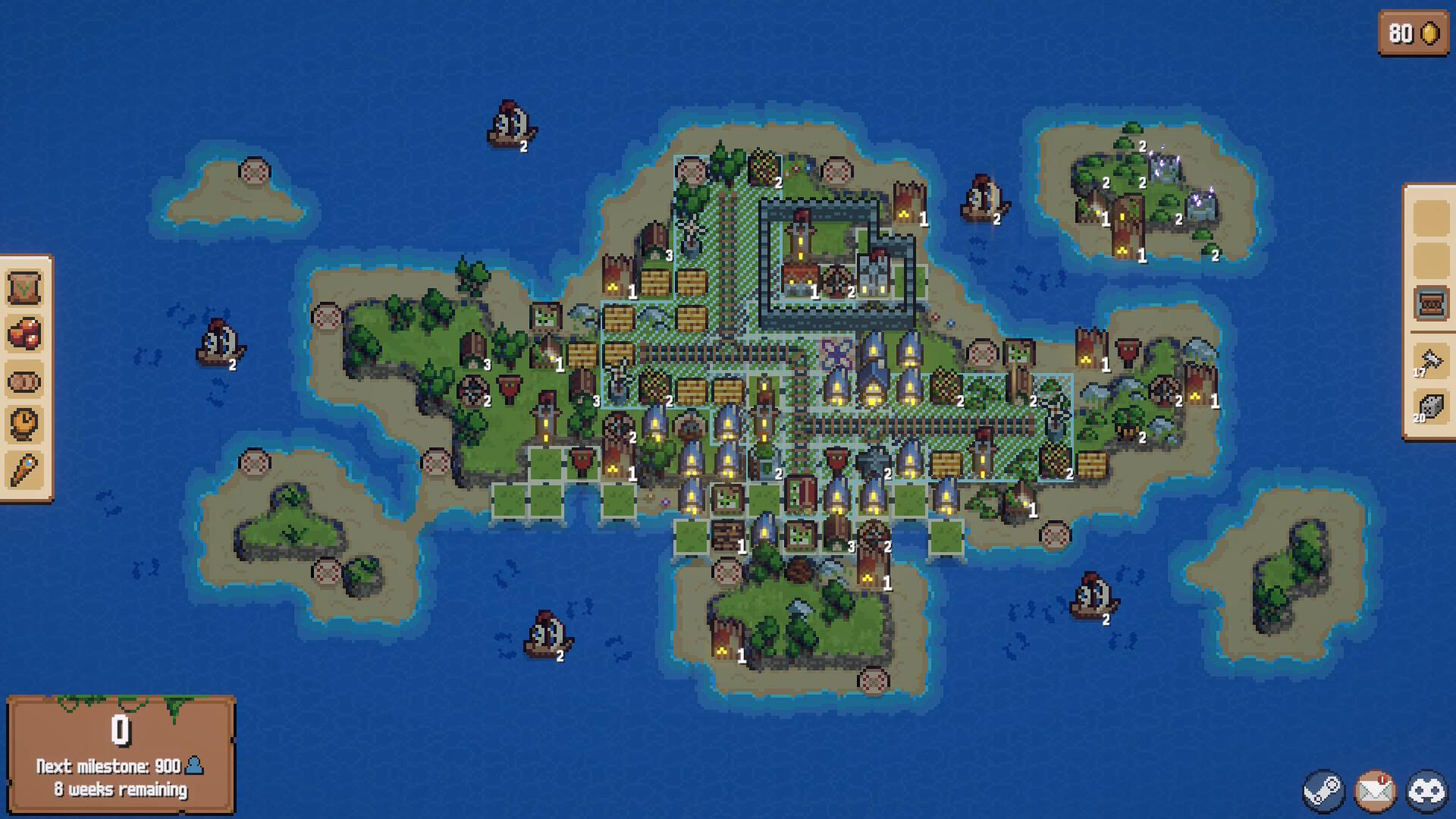
Combolands calls itself a roguelike citybuilder, and the second word is generous. You never lay a road or set a tax rate. You place one building a week on a small island and try to push a population number past a target before the weeks run out. Its closest relative is Balatro, with buildings where the playing cards would be and the island as your deck.
It comes from Crux Games, a two-person South African studio made up of Sam Alfred, who designed Terra Nil, and Skye Scott. It launched on Steam on 24 August 2026 at A$13.95 (US$9.99), for Windows only. I'm giving it an 8. The scoring engine is the best thing about it, and it's also why the game runs out of challenge.
One building a week
A run starts with two guilds picked from seven: Frontier, Agricultural, Martial, Civic, Commercial, Maritime and Industrial. That makes 21 pairings, and the pairing decides which buildings turn up in your hand. The game generates a new island for every run, so the terrain you have to work with keeps changing.
Each week the game deals three buildings and you place one, or skip all three for a coin. A milestone gives you eight weeks to reach a population target, and the targets climb fast. An early milestone asks for 900. A few milestones on, it's 13,000. Fall short by a little and the game offers a few extra weeks, which GameCritics describes as a resource you have to manage across the run.
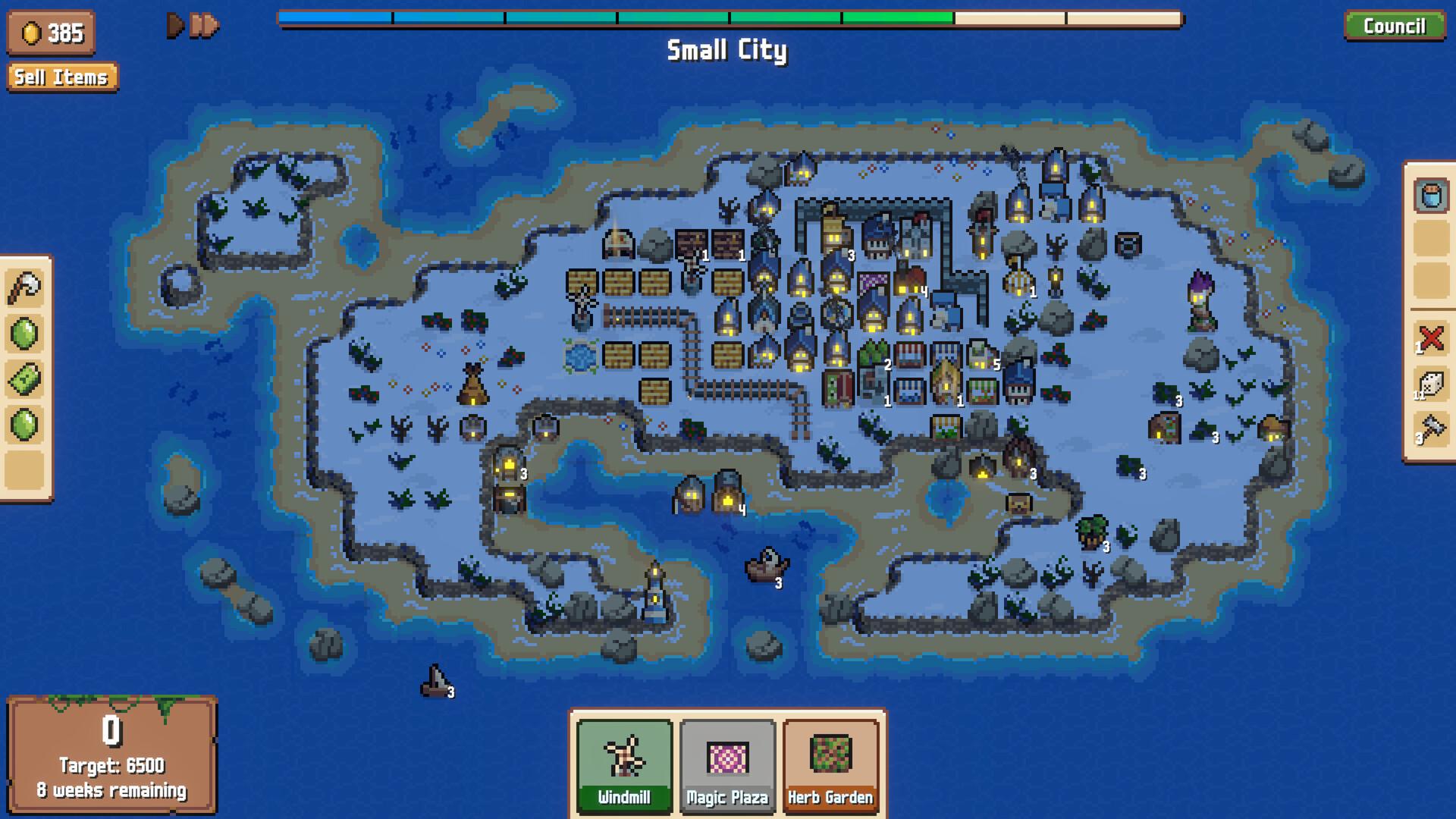
A full run takes about half an hour. That's the right length for this kind of game, because a bad run costs you a lunch break and a good one makes you start another.
+ PROS
- Seven guilds played two at a time, for 21 pairings
- Runs take about 30 minutes
- Heirlooms and paints that rewrite how buildings score
- Council requests give each milestone a side objective
- A$13.95, from a two-person studio
− CONS
- Too easy, even at the highest rank
- The early runs are slow, with the shop locked
- Finished islands don't look like towns
- Windows only, English only and not yet Steam Deck Verified
- One short music loop for the whole run
Where the numbers come from
Buildings score when they trigger, and the score depends on what sits in range. A Monument is worth 50 for every Residence connected to the Town Hall. GameCritics' review describes a barracks that pays ten points for every rock near it. Other buildings score nothing themselves and multiply their neighbours instead, and some add land, remove it or turn into something else after a set number of weeks.
So the map is the puzzle. A long coastline is an argument for Maritime, whose buildings want water. A forest suits Frontier, the guild GameCritics describes as living off nature and wildlife. The decision each week is small, and it's always the same one: which of these three does the most for what I've already built, and where does it go?
Which of these three does the most for what I've already built, and where does it go?
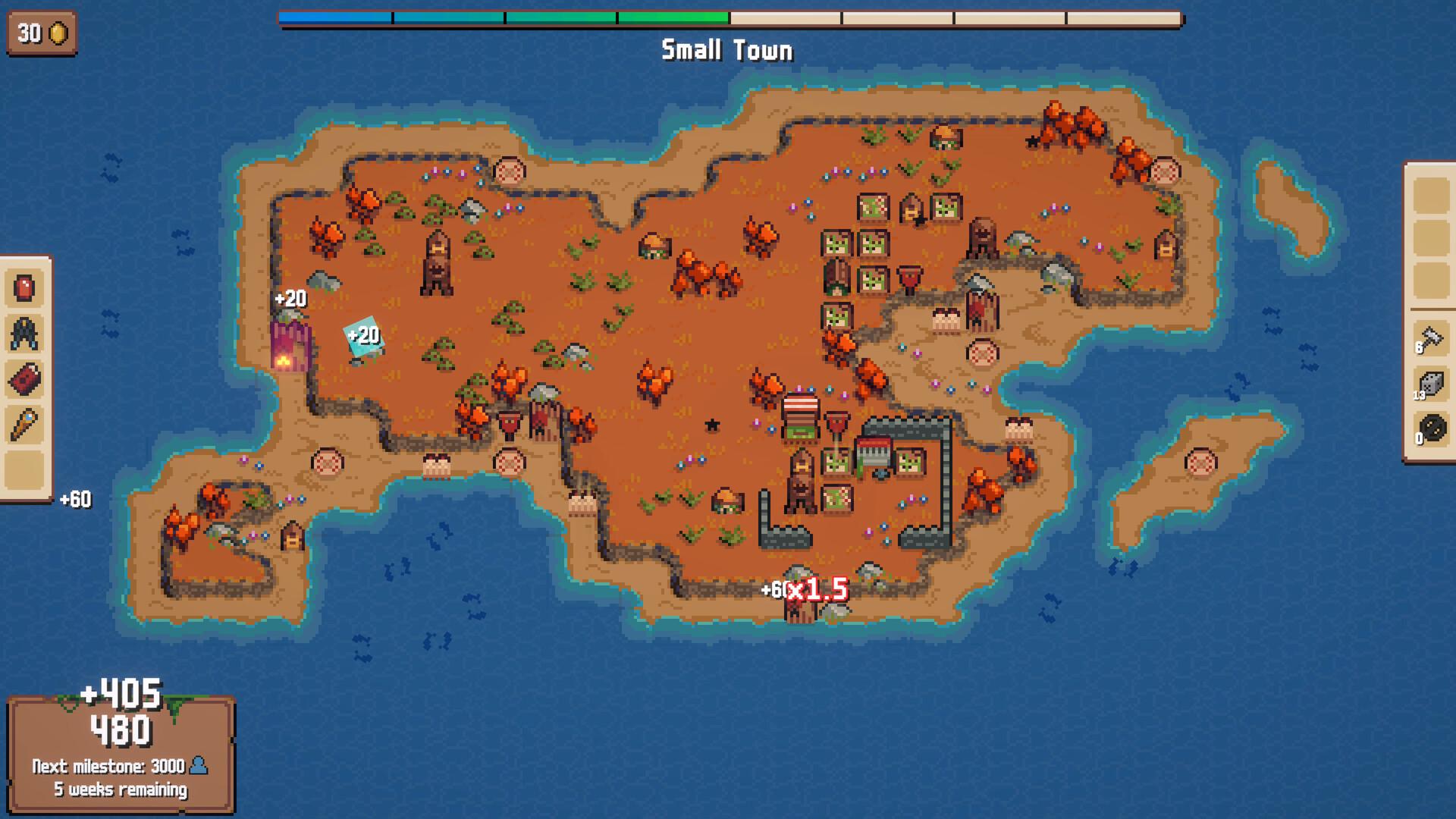
When a build comes together, one placement sets off a chain. The building triggers, its neighbours trigger off it and a multiplier lands on the lot. One of the official screenshots shows a single turn worth 8,116 population against a target of 13,000. The Steam page tells you to 'break the game', and the design means it.
The shop and the council
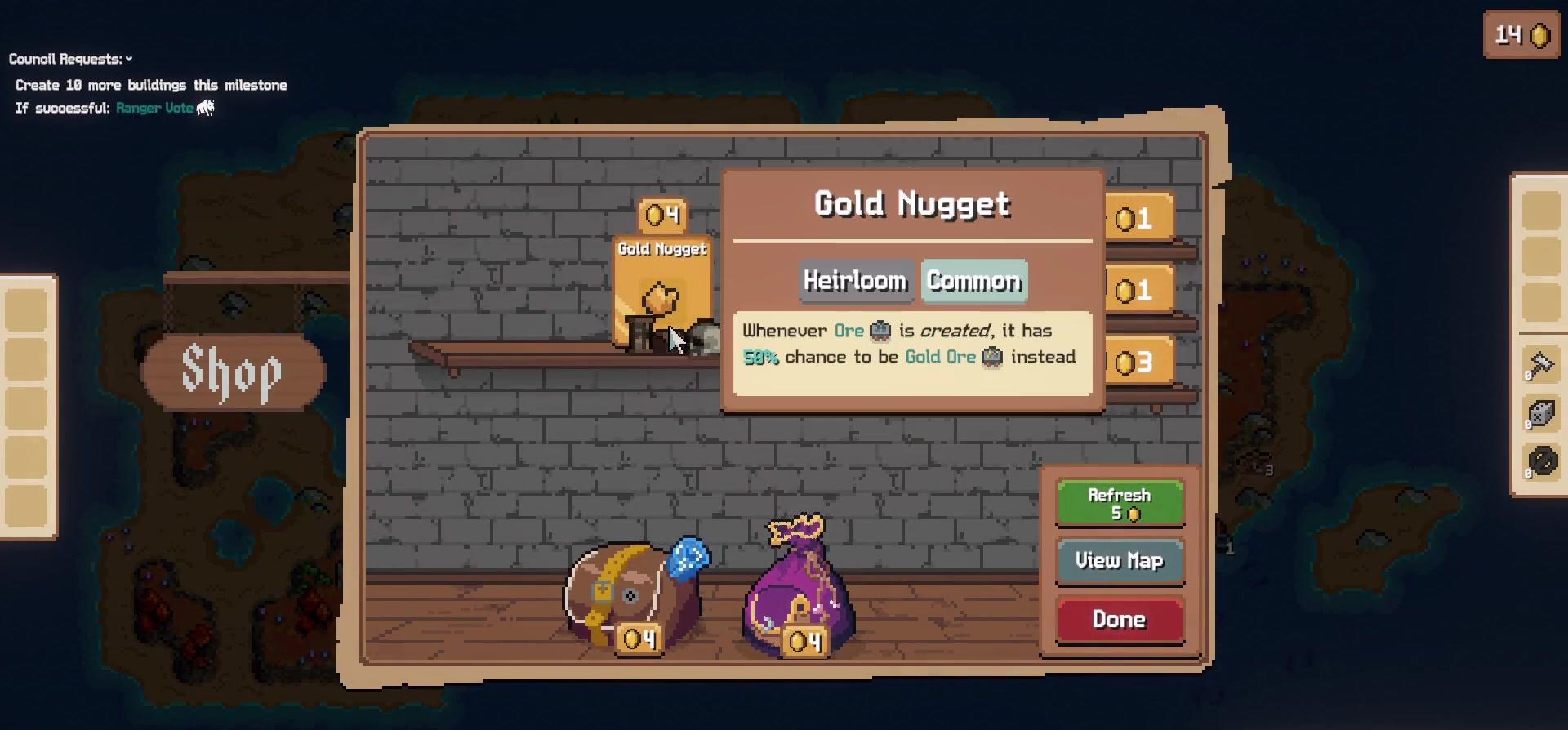
Between milestones you visit a shop and spend gold. Heirlooms are the big purchases. They're passive effects that sit in a limited number of slots, the job jokers do in Balatro, and there are more than 100 of them. Gold Nugget gives every Ore you create a 50 per cent chance of being Gold Ore, which pays a coin when you remove it. The shop also sells potions that change the map and upgrades that change a single building.
Paints are the upgrades to watch. Ghost Paint permanently changes which category a building targets, so a building that cared about one kind of neighbour now cares about another. One Steam reviewer with 17 hours played names ghost and wild paints as the fastest way to break the scoring.
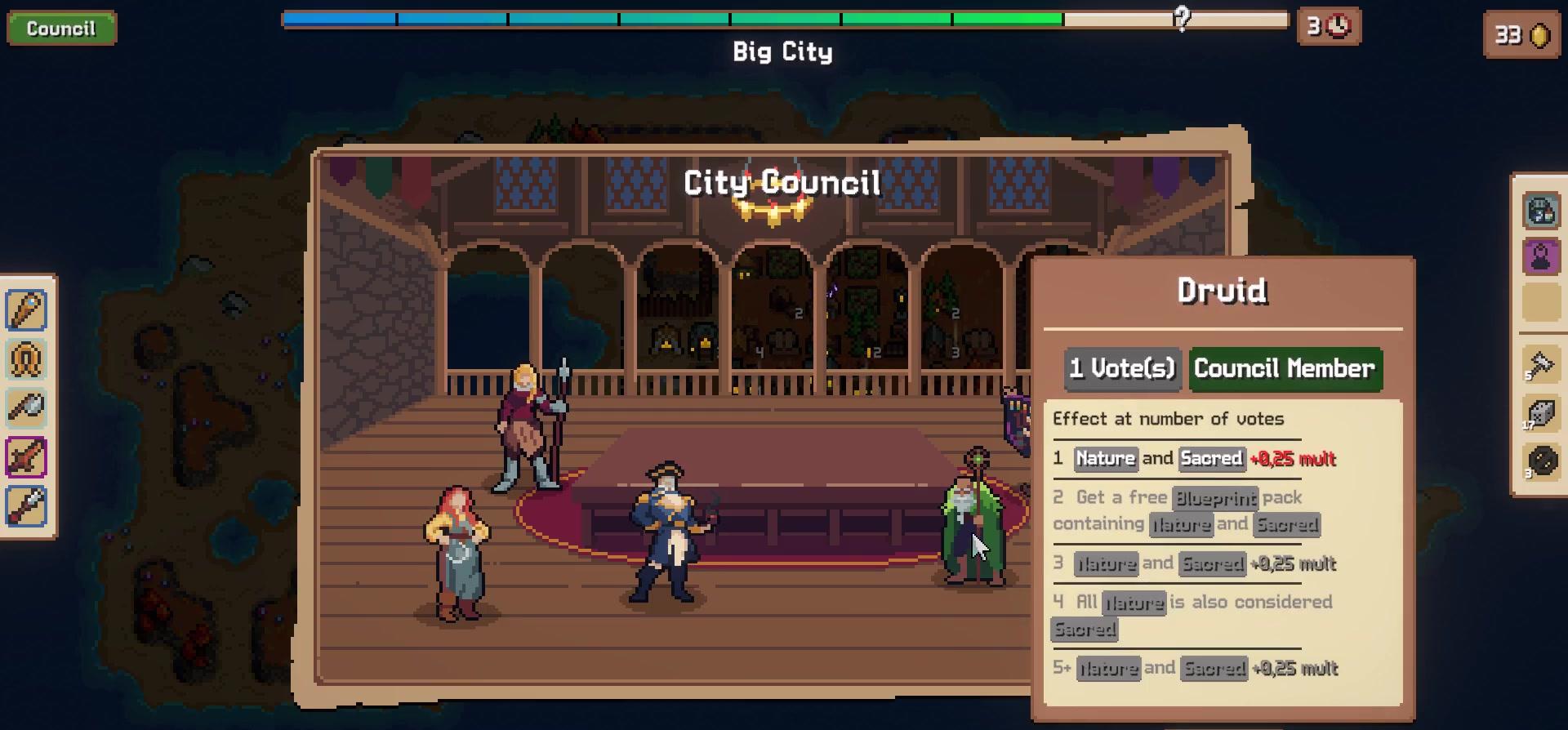
Then there's the city council. Councillors hand out requests, such as creating ten more buildings before the milestone ends, and pay in votes. Votes climb a ladder of bonuses. The Druid starts with a 0.25 multiplier on Nature and Sacred buildings, and at four votes every Nature building counts as Sacred too. That's a whole build handed over by a side objective.
Seven guilds, played two at a time
The guilds are why the game lasts. You begin with a couple and unlock the rest by playing, and each guild levels up on its own track, adding buildings to the pool as it goes. Because every run mixes two, a guild you know well plays differently beside a new partner. The developers describe Martial as a guild built around removing buildings, which gives you an idea of how far apart the seven sit.
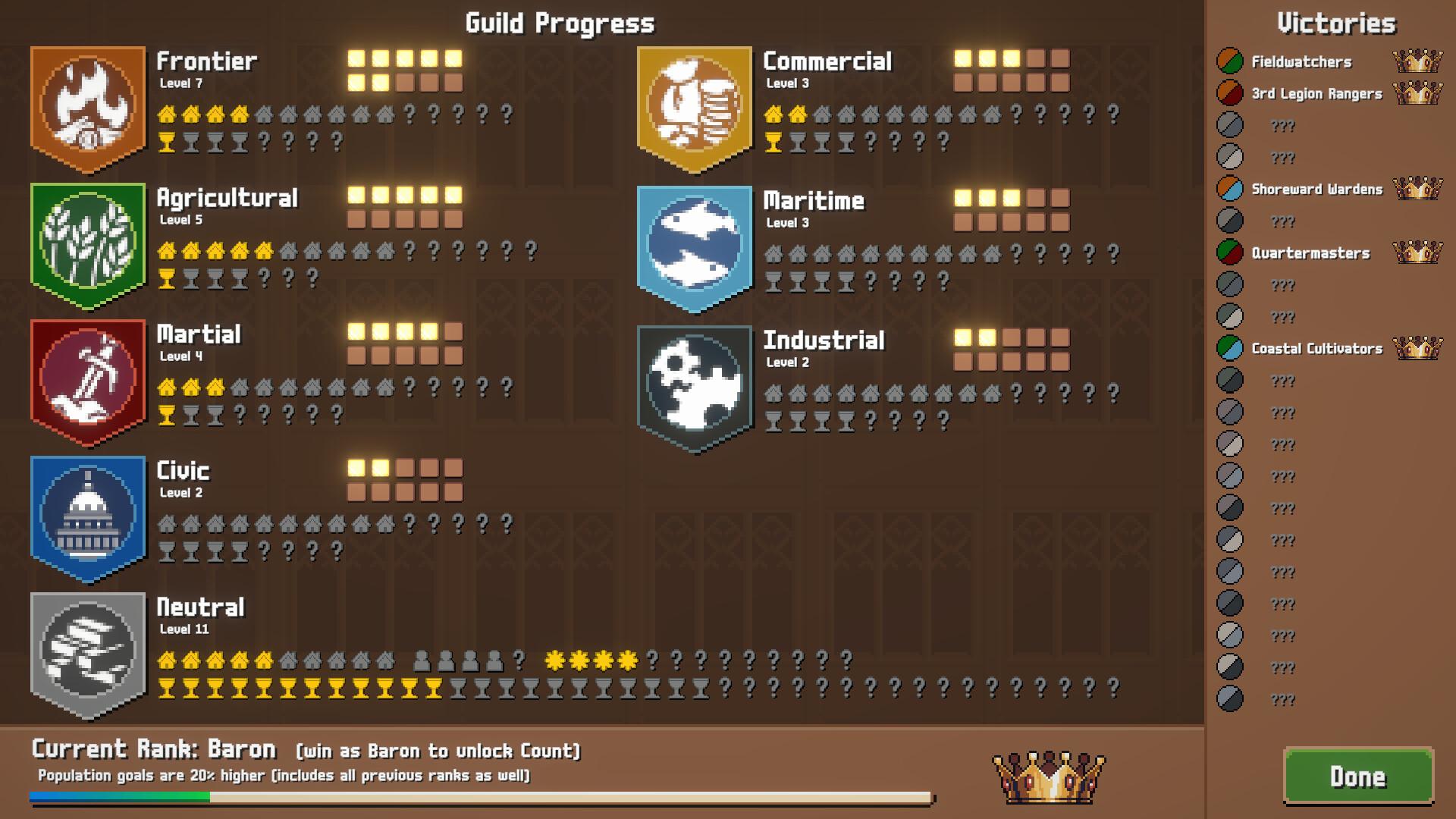
Winning also moves you up through ten ranks, and each rank makes the next run harder. Baron raises every population goal by 20 per cent. GameCritics reports that higher ranks add hazards as well, such as buildings that score less or disappear after eight weeks.
Where it falls short
Difficulty is the real problem. The most common complaint in the Steam reviews, positive ones included, is that Combolands is too easy. One player with 35 hours says they failed two runs out of more than 30, top rank included. Another reached rank ten without losing once. The ranks raise the targets, and the combos you learn to build outrun them anyway. In a game about breaking the scoring that's partly a compliment, but it turns the back half of the unlock list into a victory lap.
The opening has the opposite problem. The game keeps the shop locked for your early runs, and a Steam reviewer who nearly refunded it says it only opened up once the shop and a few more guilds arrived. Crux lowered some unlock thresholds just before launch. The early runs are still the weakest part.
It also isn't much of a citybuilder. Nothing connects to anything. One negative Steam review points out that rail lines run from nowhere to nowhere and walls defend nobody, and that a finished island looks like a stamp collection. If you want a town that makes sense, this won't give you one.
The rest comes down to a small team. It's Windows only and English only. Valve rates it Playable on Steam Deck, one step short of Verified, and Crux says text legibility is the main issue. Neither developer owns a Deck, because Valve doesn't sell them in South Africa. Localisation and Deck verification are next on their list, with no dates attached. One Steam reviewer also notes that a single short music track loops for the whole run.
Watch the trailer
Verdict
Combolands is a combo puzzle with citybuilder art, and it's a very good combo puzzle. Seven guilds and more than 100 heirlooms give every half-hour run a different route to a silly number. It's too easy at the top and too slow at the start, and it won't satisfy anyone who wants to plan a real town. At A$13.95 it's an easy recommendation for anyone who liked Balatro, and I'd buy it for the guild pairings alone.

PLAYER COMMENTS
LOADING...