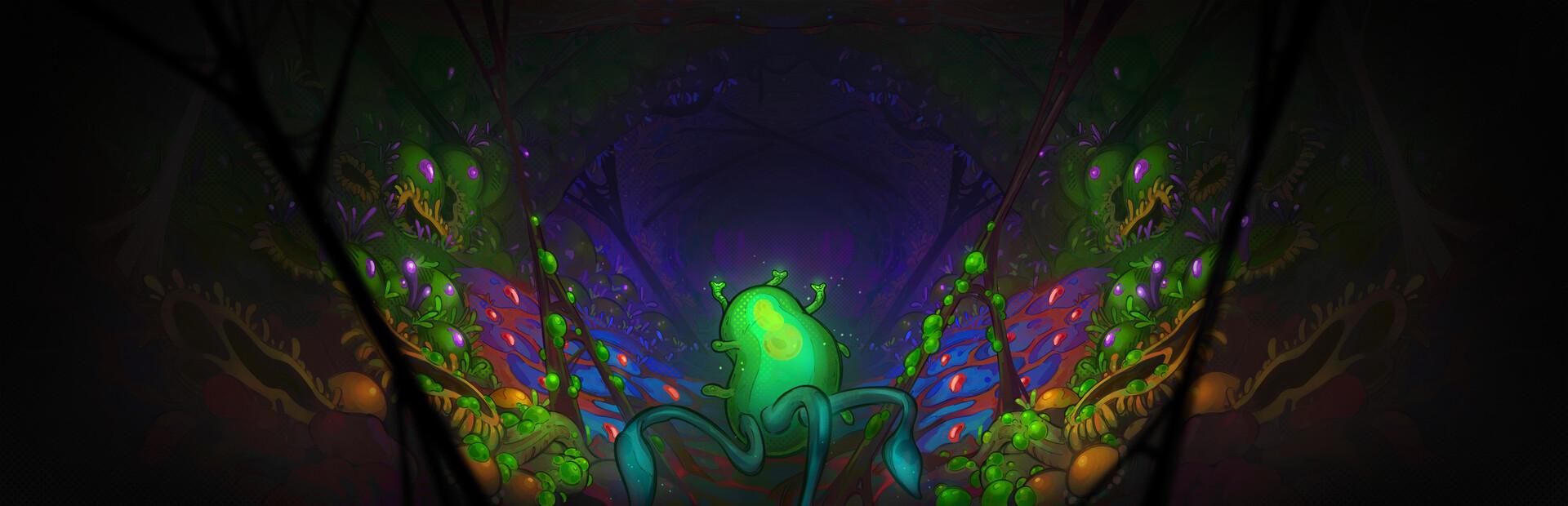
▶ TL;DRPathogenic has the most inventive roguelike build system I have played this year. The movement rules take some fighting before they click, and the stamina bar will irritate you until you unlock past it, but the organelle looting loop is so good that I kept forgiving it. Under fifteen dollars for something this compulsive is an easy yes.
Most roguelikes hand you a character and let you decorate them. Pathogenic hands you a single-celled organism and a scalpel, and tells you that everything you want to become is currently inside something else that is trying to kill you. I went in expecting a cute science gimmick. I came out about twenty hours later, at one in the morning on a work night, muttering "one more lung" at my monitor like a person who has made poor choices.
You Are the Bad Guy, Biologically Speaking
You play a pathogen. Not a heroic white blood cell, not a plucky scientist with a microscope: the actual infection. Aberrant Labs drops you into a human body and asks you to work your way through six procedurally generated biomes, the lungs and heart and intestines and worse, while the host's immune system slowly realises what is happening and escalates accordingly.
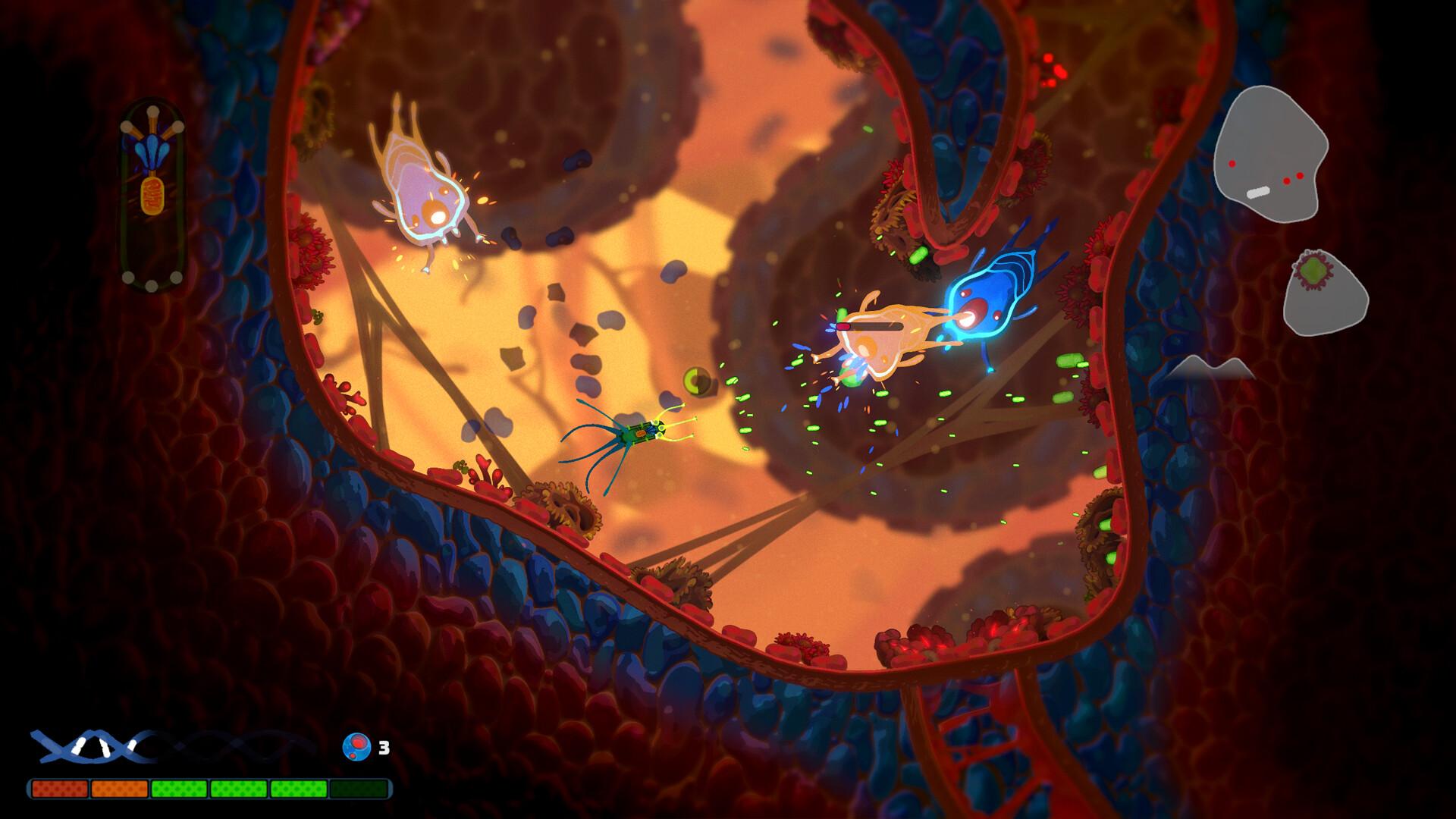
The framing does real work here. In most twin-stick roguelikes the enemies are just shapes with health bars. In Pathogenic they are an immune response, and they behave like one. Early rooms throw sluggish, confused cells at you. Push deeper and you start meeting things that were clearly built to hunt exactly the sort of organism you have been assembling. Getting swarmed feels less like difficulty scaling and more like being noticed.
+ PROS
- 120+ organelles that genuinely reshape a run, not just pad the numbers
- Soft-body physics make every fight look and feel disgustingly alive
- Six biomes with distinct immune responses keep the escalation ramping
- Generous accessibility options: auto-fire, difficulty tiers, cytokine storm toggle
- Local co-op and 15 challenge modes for under fifteen Australian dollars
− CONS
- The stamina bar interrupts the flow until you unlock your way around it
- Default acceleration is sluggish in a game built entirely on dodging
- Rooms do not signal a second wave, so bomb usage is guesswork
- Thin invulnerability frames after a hit, and you can get stuck inside enemies
- The six biomes start showing their seams around run twenty
Stealing Organs and Bolting Them On
Here is the hook, and it is a great one. When you kill a cell, you can rip out its organelles and graft them onto yourself. Flagella for speed. Mitochondria for energy. Secretors, spikes, and a hundred other bits of stolen machinery. There are over 120 of them, and crucially they attach to your actual body, which means your pathogen visibly becomes a lopsided horror over the course of a run.
What sells it is that these are not stat sticks. Grafting three flagella onto one side genuinely changes how you turn. A build stacked around secretors plays like a completely different game to one built on spikes, because you stop chasing enemies and start laying traps and waiting. I had one run where I accidentally assembled something that could barely shoot but left a poison trail everywhere it went, and I spent fifteen minutes leading immune cells in slow circles until they dissolved. That is not a build the tutorial suggested. That is the system being deep enough to surprise its own designers.
Every organelle you want is currently installed in something trying to kill you.
Between runs there is a plasmid tree that unlocks new pathogen types (seven of them, drawn from real biology) and permanent tweaks. It is the standard metaprogression shape and it works fine, though it is the least interesting part of the design. The good stuff all happens inside a run.
It Wobbles, and That Matters
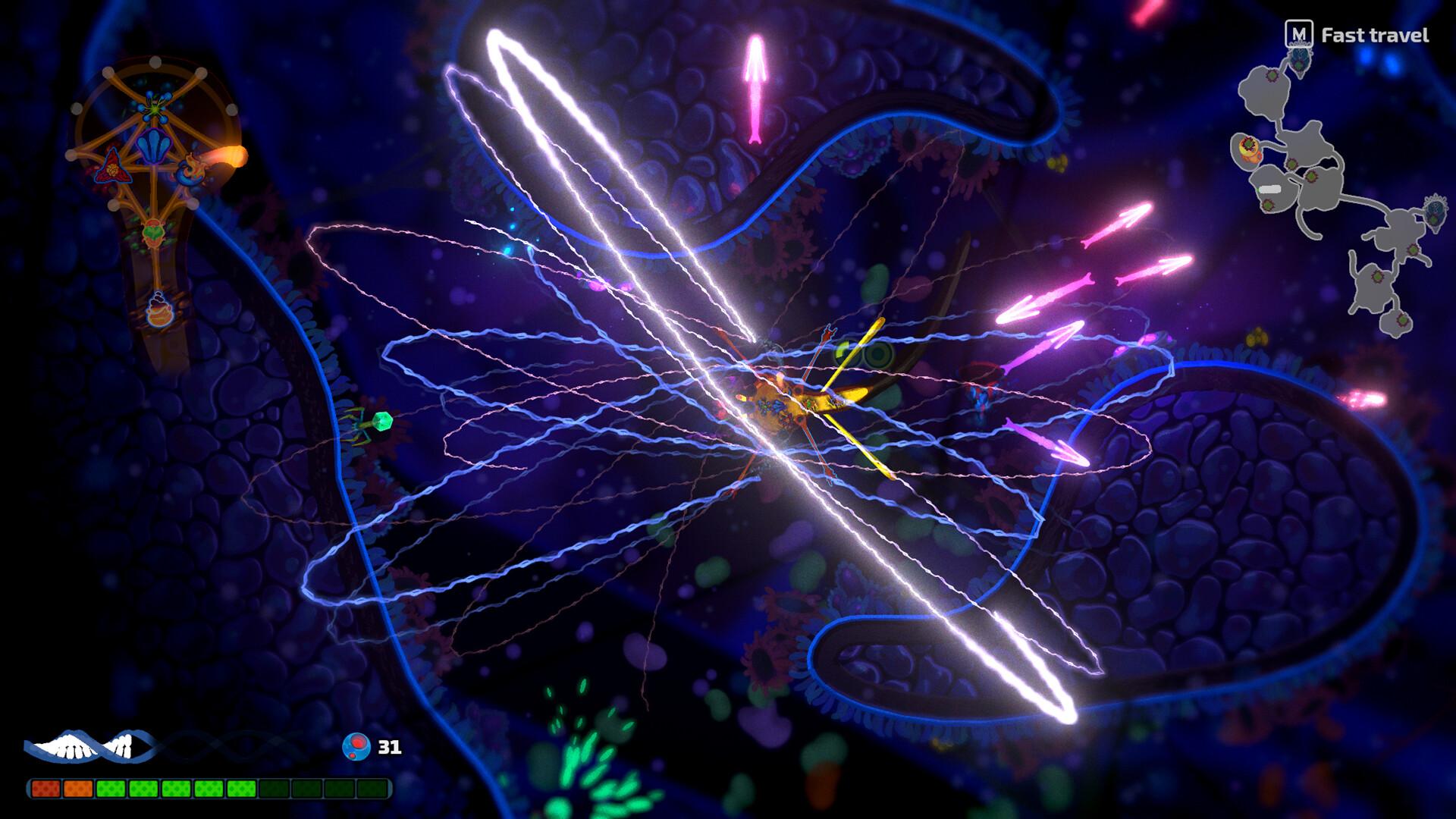
The whole game runs on soft-body physics, and it is the single best presentation decision in it. Nothing is rigid. Your pathogen squashes when it hits a wall, tendrils drag behind you, enemies deform when you shoot them and burst rather than vanish. It reads as genuinely alive in a way that sprite-based games in this space never quite manage, and it turns what could have been a sterile biology diagram into something faintly upsetting to look at. Complimentary.
The audio matches. Slug Disco bills the game as coming from Brotato's composer, and the soundtrack does that same trick of being weirdly upbeat about something horrible. Squelching, wet sound design underneath, driving synths on top.
Where It Actually Falls Down
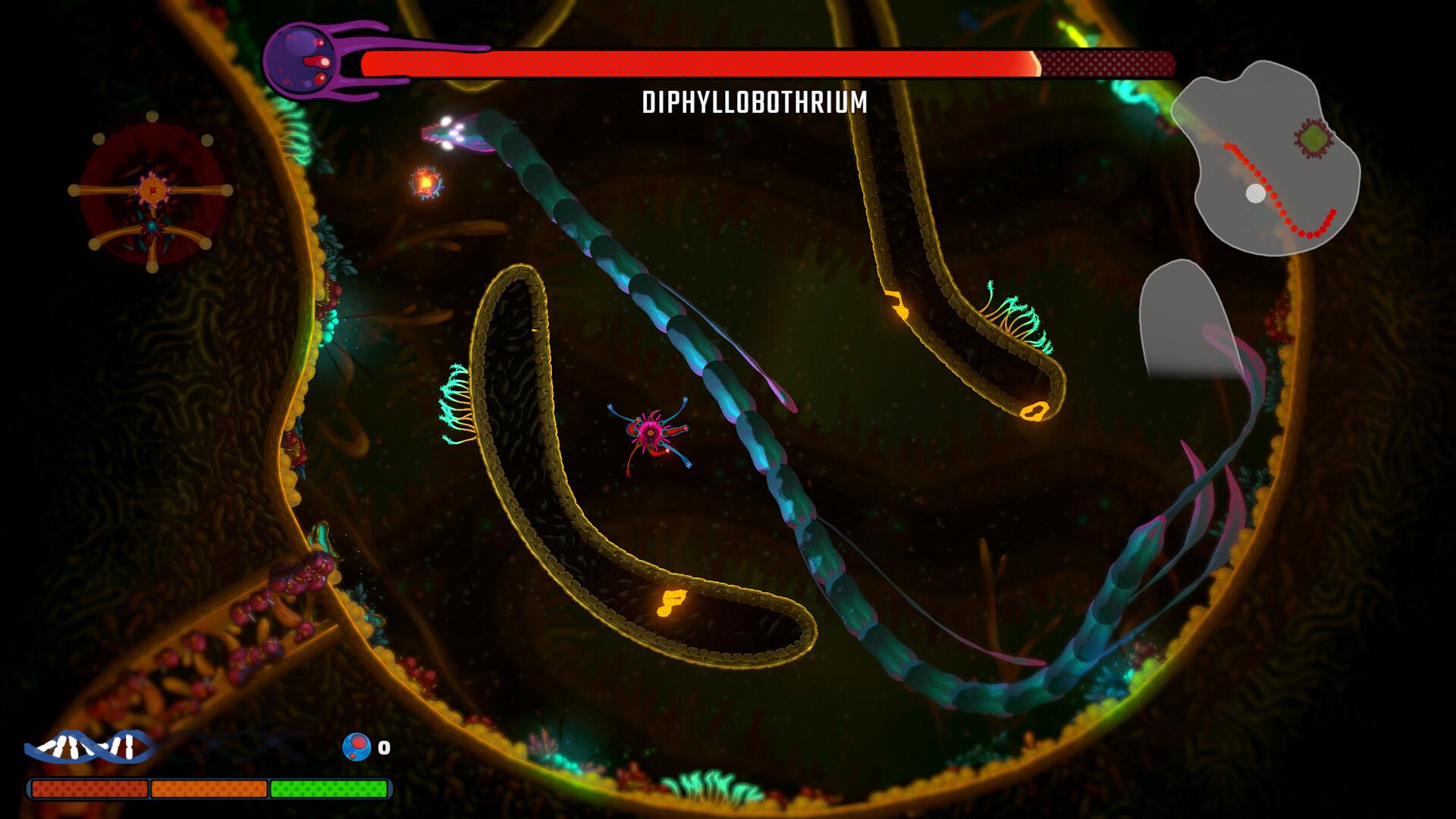
The moment-to-moment feel is the weakest thing here, and it is worth being blunt about it because it is the first thing you touch. Shooting drains a stamina bar, so you fire, then wait. In a bullet hell built on constant motion and pressure, being told to stop every few seconds fights the genre it is in. The developers have defended it as a deliberate anti-button-holding measure, and there is a plasmid upgrade that effectively removes it, which tells you they know it lands badly for a chunk of players. It did for me for the first three hours.
Acceleration is the other one. You do not start moving instantly, you ramp up, and in a game where dodging is the entire defensive toolkit that sluggishness is felt on every single dodge until you have spent enough organelles fixing it. Paying build slots to make your character control properly is a tax, not a choice.
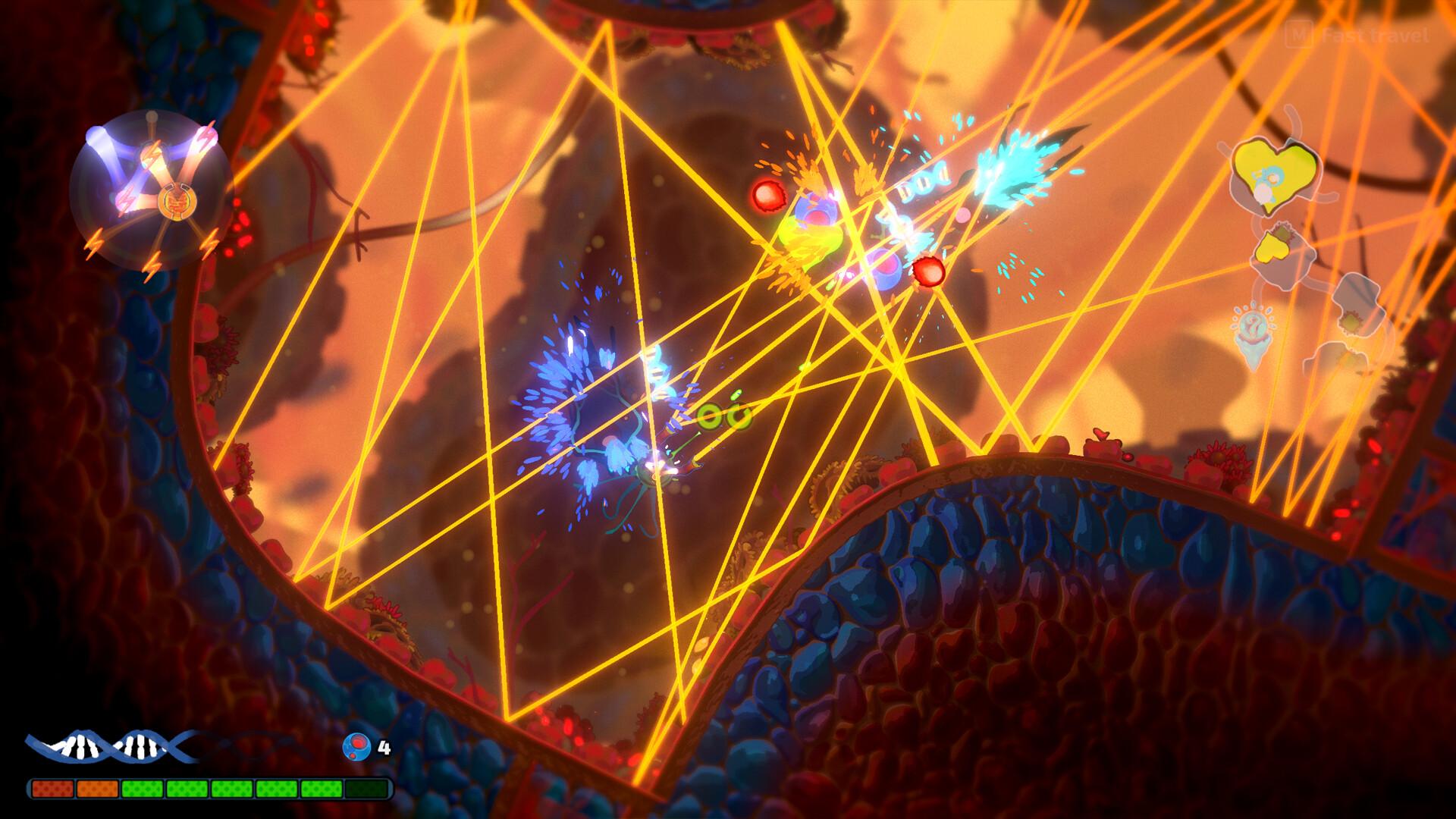
Smaller irritations pile up around those two. Invulnerability frames after taking a hit are thin, so one mistake often becomes three. You can get lodged inside larger enemies and take a beating while you wriggle free. And rooms do not signal whether they will spawn one wave or two, which makes deciding when to burn a bomb a coin flip rather than a read. None of these are run-ruining on their own; together they are the reason this is not a nine.
I will also say that six biomes is not a lot. Around run twenty the layouts start rhyming, and the 15 challenge modes are doing a fair bit of heavy lifting to keep things fresh after that. The build system has more longevity in it than the environments do.
Who It Is For
If you liked Brotato or Nova Drift and wished the builds were more physical, this is aimed directly at you. It is under fifteen Australian dollars, it has a free demo, it runs on Mac and Linux as well as Windows, and it ships with a genuinely thoughtful set of accessibility options: auto-fire, three difficulty tiers, and a toggle for the run-ending cytokine storm event. There is local co-op too, though the screen gets extremely busy with two players and I would not call it the main event.
Steam has it sitting around 96% positive since launch, which for once matches my experience rather than the usual honeymoon inflation. The rough edges are real, but they are the kind you route around rather than bounce off.
Watch the Trailer
Verdict
Pathogenic took a premise that could have been a one-joke itch.io toy and built a properly deep looting-and-grafting roguelike underneath it. The controls need arguing with for the first few hours, and the environments run out of ideas before the builds do, but I have not been this eager to start another run since Brotato. Buy it, turn off the stamina bar the second the game lets you, and go ruin somebody's afternoon from the inside.

PLAYER COMMENTS
LOADING...