▶ TL;DRMaster Healer Kale takes the least glamorous job in every RPG and builds four sharp hours out of it. The spell economy has more depth than an incremental game needs and the skill tree is genuinely fun to break. It never turns its party into characters, which is the one place the joke runs out, but at A$5.75 that is a quibble about a game that knows exactly how long to stay.
Every party RPG has the person who does not get the highlight reel. Somebody watches four health bars while everyone else watches the boss, and the reward for doing it perfectly is that nothing happens. Master Healer Kale with useless party is four hours built entirely out of that job, and it turns out the job is more interesting than the sword swinging ever was.
You do not attack. That is the whole idea.
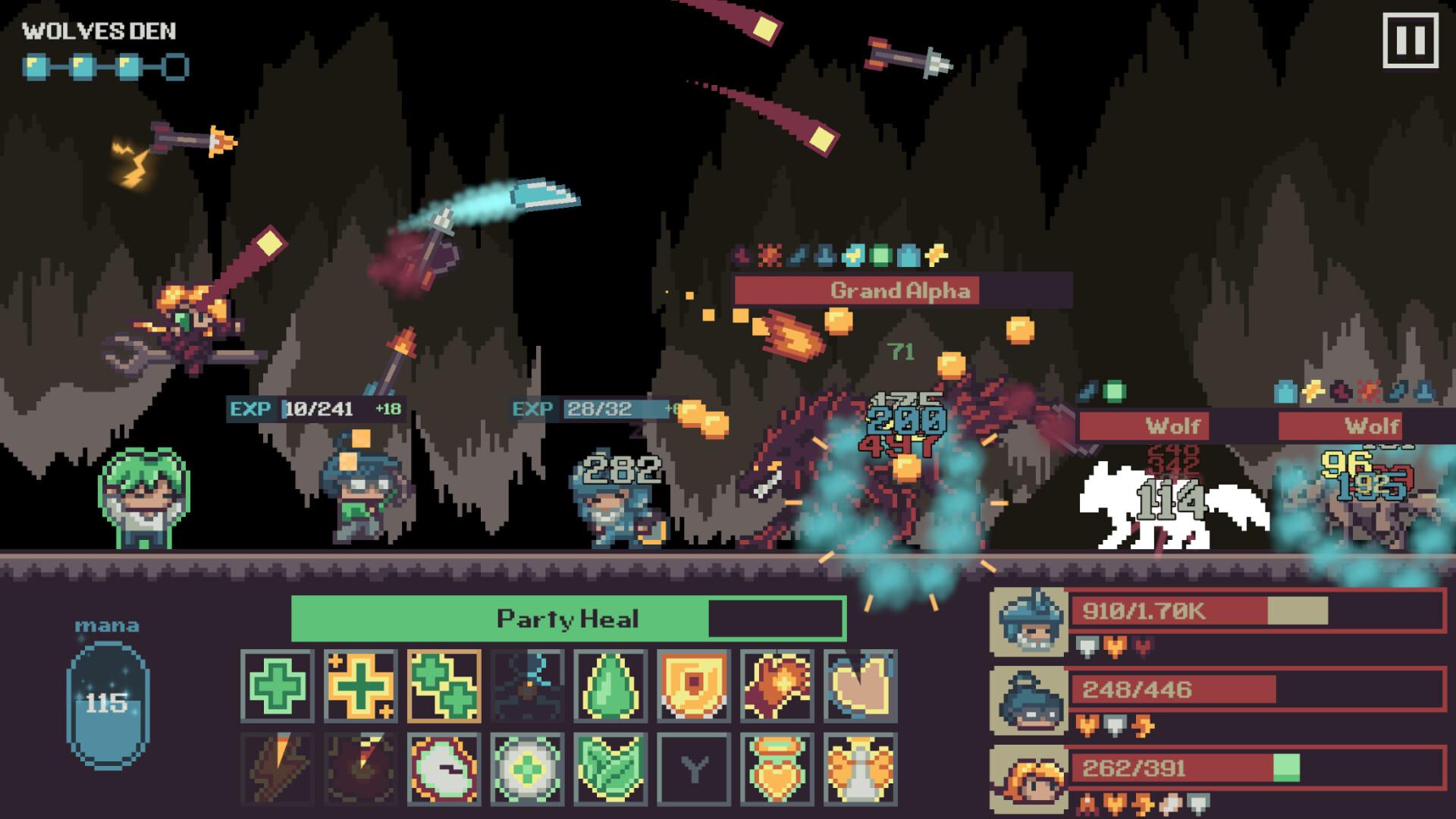
Kale walks into a dungeon with three people who are, per the title, useless. A tank who sleeps through fights, a rookie archer, and a mage who is talented and unbearable in roughly equal measure. They attack on their own. You cannot move them, aim them or tell them to stop pulling. Your entire contribution is a mana bar and a grid of support spells, and the game is honest enough to put your mana pool at the far left of the screen where a weapon would normally sit.
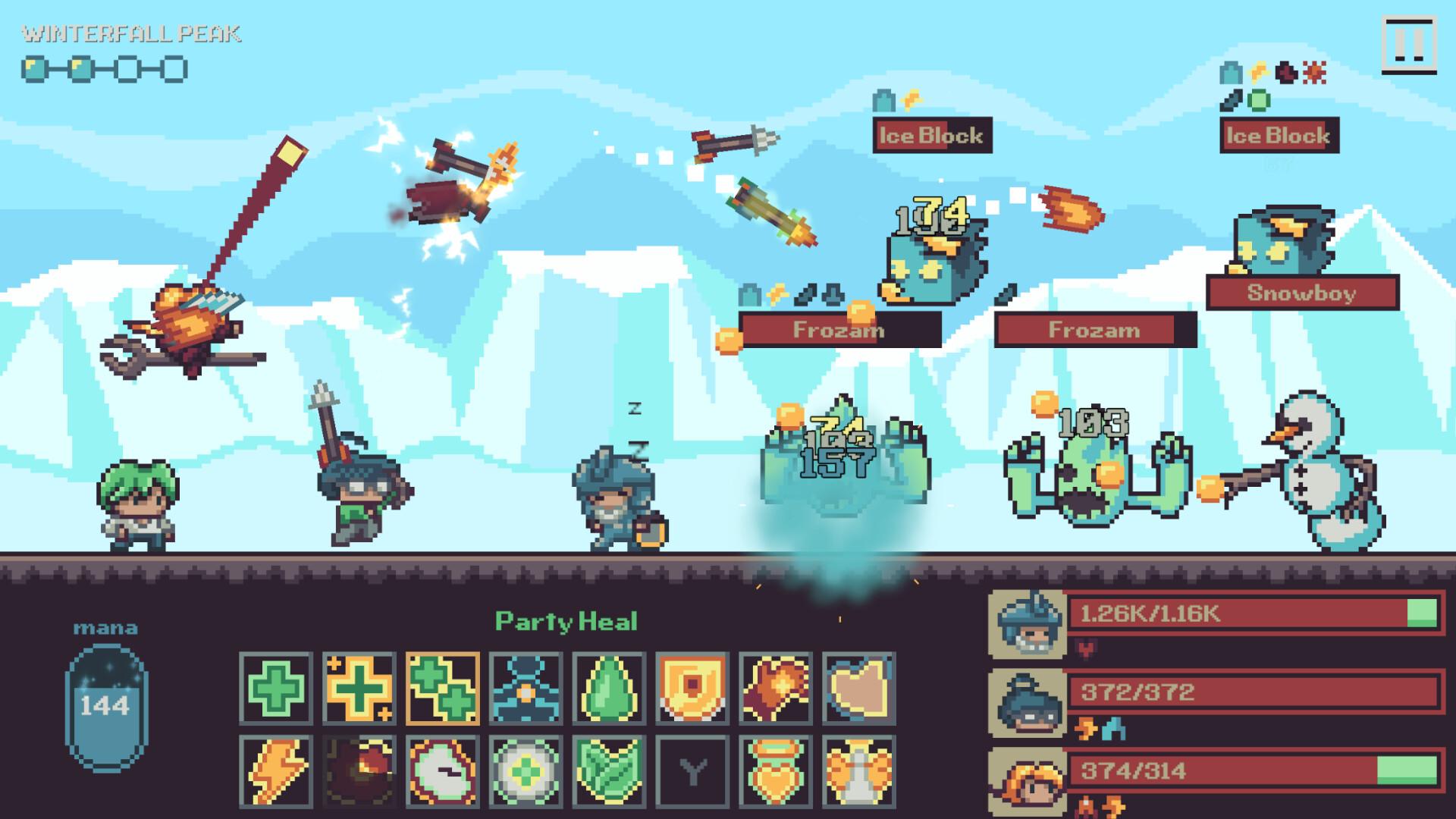
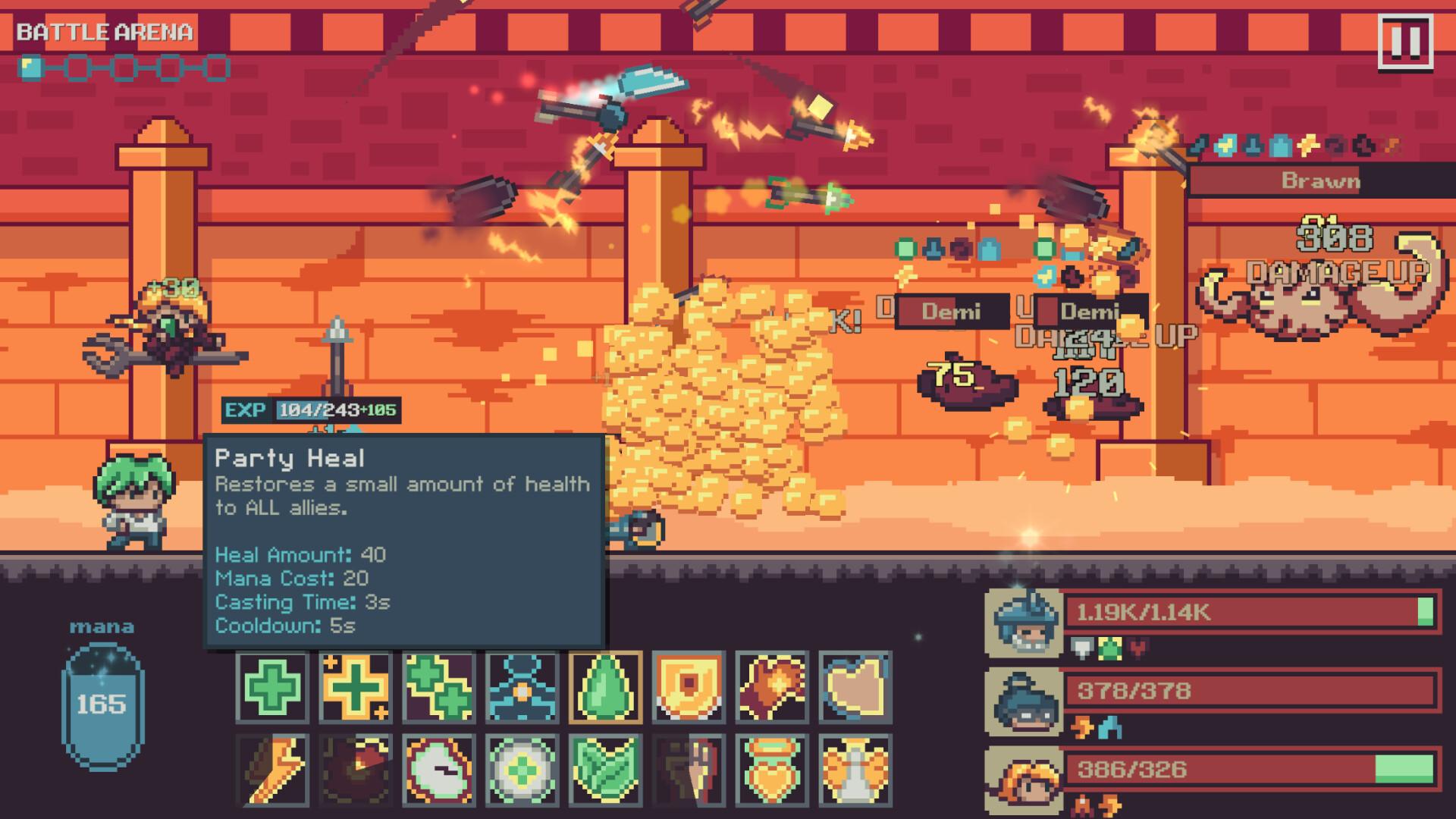
It should be passive and it is not, because the spells are built as an economy rather than a list. Heal restores 60 health for 10 mana with a one second cast and a two second cooldown. Party Heal spreads 40 across everyone for 20 mana, but takes three seconds to cast and locks for five. Those numbers are the game. Do you top up the archer now, or hold the cast because the tank is about to eat something enormous and a three second window is exactly long enough to lose him in?
+ PROS
- The healer fantasy done properly: you are the reason they are alive
- A 200 node skill tree that genuinely changes how you play
- Cast time, cooldown and mana form a real economy under the idle surface
- Dungeon modifiers force different spell loadouts instead of one build
- Four focused hours at A$5.75, with no filler bolted on
− CONS
- The party members are jokes in a title, not characters
- Combat runs itself, so long stretches are watching rather than playing
- The story stops at premise and never develops
- Nothing to spend the endgame on once the tree is full
- Zero replay value outside the Nightmare tier
The skill tree is the actual game
Two hundred nodes, and the important thing is that they are not all yours at once. The tree branches into healing throughput, party damage and a set of facility upgrades, and by the midpoint you are choosing which kind of healer you want to be. Pure support, where the party is unkillable and fights take a while. Or buff-heavy, where you push their damage so far that stages end before anyone can die, which is its own kind of healing if you think about it sideways.
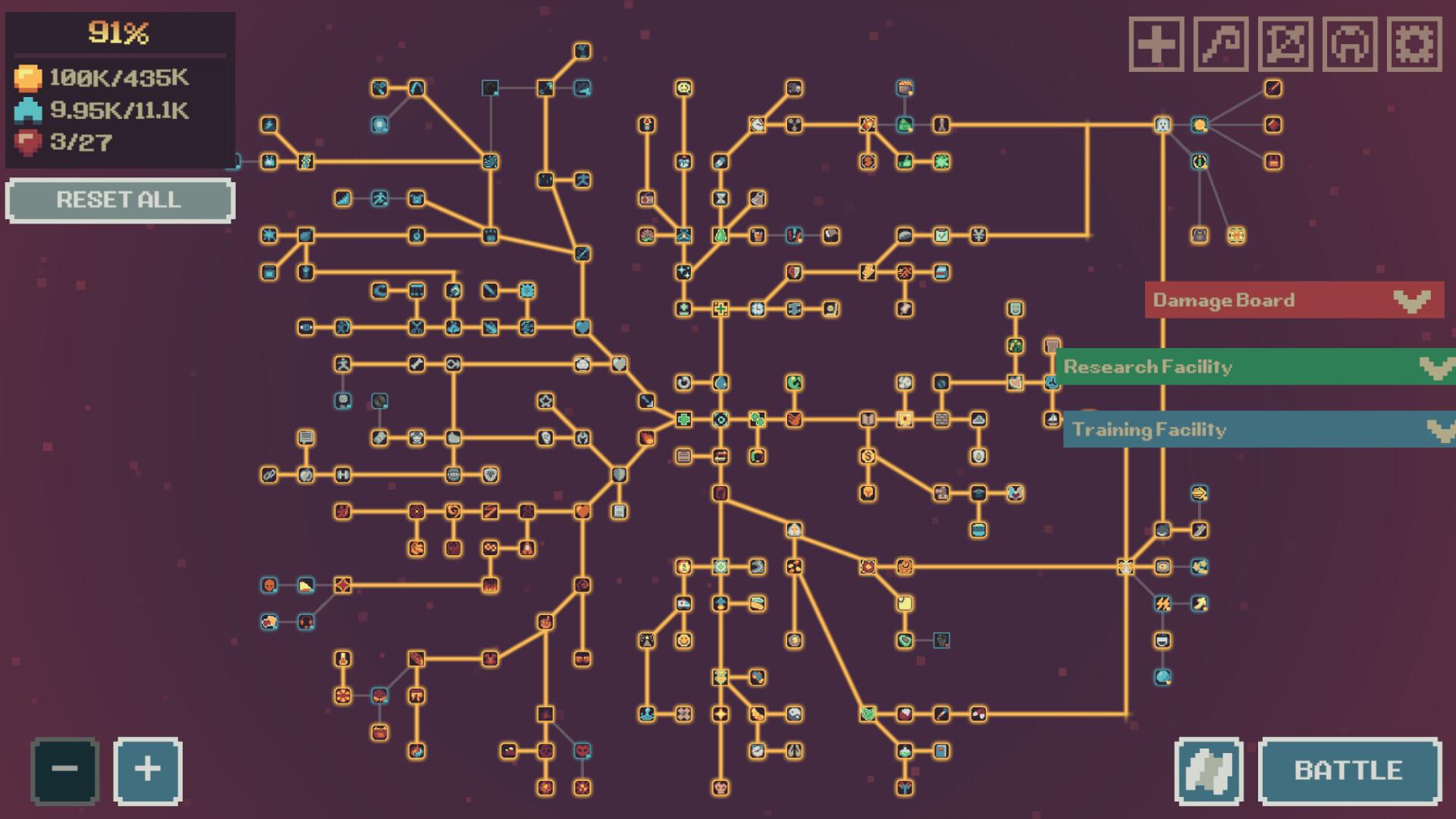
Reset All sits in the top corner and costs nothing, which is the right call for a game this short. I rebuilt three times in four hours, twice because a dungeon punished the build I had walked in with, once because I wanted to see how far the damage side went. A tree you can rip up is a tree you actually experiment with.
The reward for healing perfectly is that nothing happens. This is the first game to make that feel like a win.
Dungeons that argue with your build
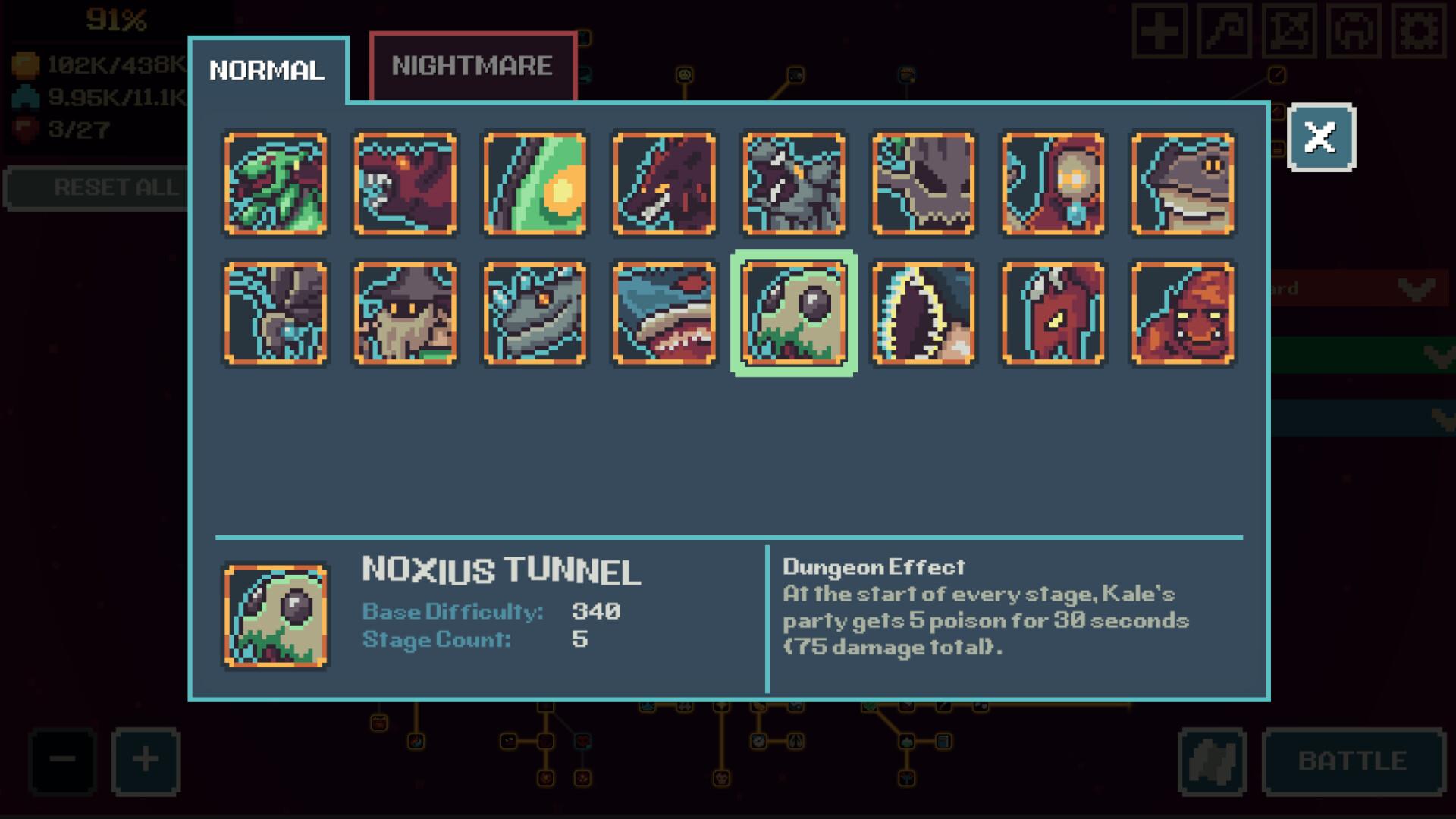
Sixteen dungeons, each with a stated base difficulty, a stage count and a modifier written on the tin. Noxius Tunnel is difficulty 340 across five stages and opens every stage by putting five stacks of poison on the party for thirty seconds, 75 damage in total. That is a small number early and a serious one when it lands on top of a boss that also hits hard. It is the difference between a heal being nice and a heal being on a timer.
Bosses are where the automation stops being a limitation. You cannot dodge for your party, so the only lever you have is anticipation: pre-buff before the wind-up, hold the expensive cast, decide which of three people you are willing to lose. Getting that wrong at difficulty 340 is not a fail state you can out-click, and the game is better for refusing to give you one.
Where it runs out
The party never becomes anything more than the title promised. The sleeping tank is a running gag with no second act, the mage is rude in a way that never costs anybody anything, and the archer is mostly a health bar with a hat. A premise this good deserved dialogue between fights, a reason they are like this, one moment where the useless party is useless in a way that matters to the story rather than the numbers. Evrac Studio wrote the joke on the box and then let the mechanics carry it alone.
The automation cuts both ways, too. When a build is working, whole stages pass with you watching numbers climb and pressing nothing, which is satisfying as a payoff and thin as a minute of gameplay. And when the tree is full there is nowhere left to go except the Nightmare tier, which raises the numbers without changing the questions. This is a four hour game with a four hour supply of ideas, and I would rather that than the alternative, but do not expect it to hold a weekend.
Watch the trailer
Verdict
A$5.75 for four hours that respect your time, built on the one RPG role nobody designs a game around. The Steam crowd has it at 96% positive across more than 1,600 reviews, and for once that is not enthusiasm outrunning the product: the spell economy is sharper than an incremental game needs to be, and the skill tree is a genuine toy. It never gets around to being funny on purpose, which is the gap between this and something I would still be thinking about in a year. Buy it anyway. You will finish it in two sittings and you will not resent either of them.

PLAYER COMMENTS
LOADING...