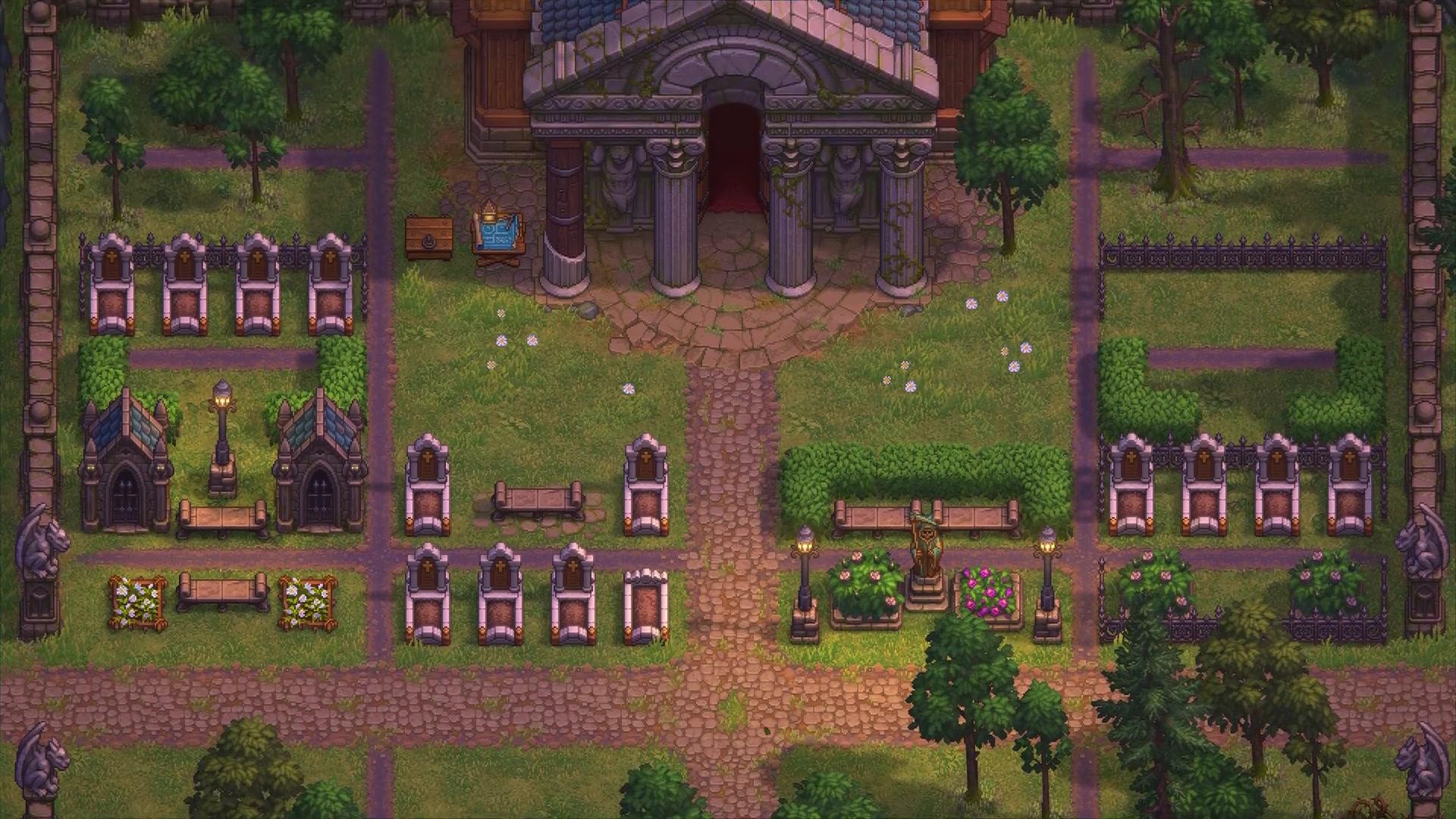
▶ TL;DRGraveyard Keeper 2 is the sequel my review of the first game asked for. It's still a grind and the combat is thin, but with zombies running the production lines, losing evenings to half-finished jobs and mystery bronze nails is the most fun I've had in a management sim this year. Skip the original Switch version and play it on PC or a current console.
I gave the first Graveyard Keeper a 7.5 here, and my complaints were specific. It was a grind, and there wasn't enough automation to take the edge off until a DLC called Breaking Dead added zombie workers. I said at the time that Breaking Dead should have been in the base game.
Lazy Bear Games has built the sequel around almost exactly that list. Zombie automation is there from the start and tech points no longer run dry. It is still a grind. It is also the most fun I've had forgetting what I was doing in a video game, and that's why Graveyard Keeper 2 gets a 9.
This time you play a second version of the Keeper. A fairy breaks you out of an Inquisition dungeon, a talking skull called Larry attaches himself to you, and the locals mistake you for an Inquisitor and hand you a graveyard with a zombie problem attached. The corpse donkey is back as well, still a communist and still furious that his job is carrying dead bodies.
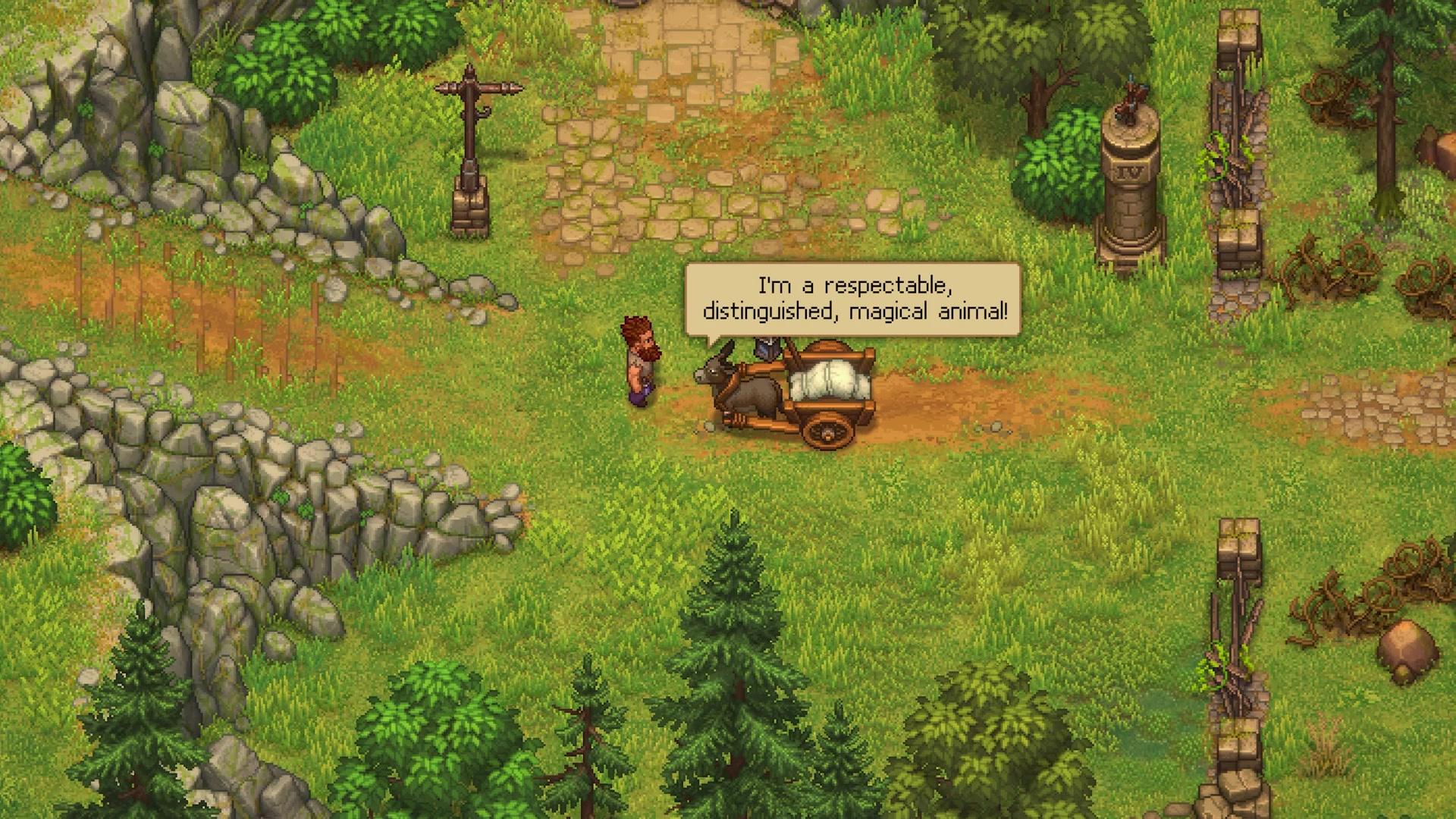
What it learned from the first game
The first game's tech tree ran on red, green and blue points, and I was always short of one colour. I'd spend whole in-game weeks reading at a desk to afford a single recipe. In the sequel the points come in steadily from ordinary work, so recipes unlock roughly when I need them.
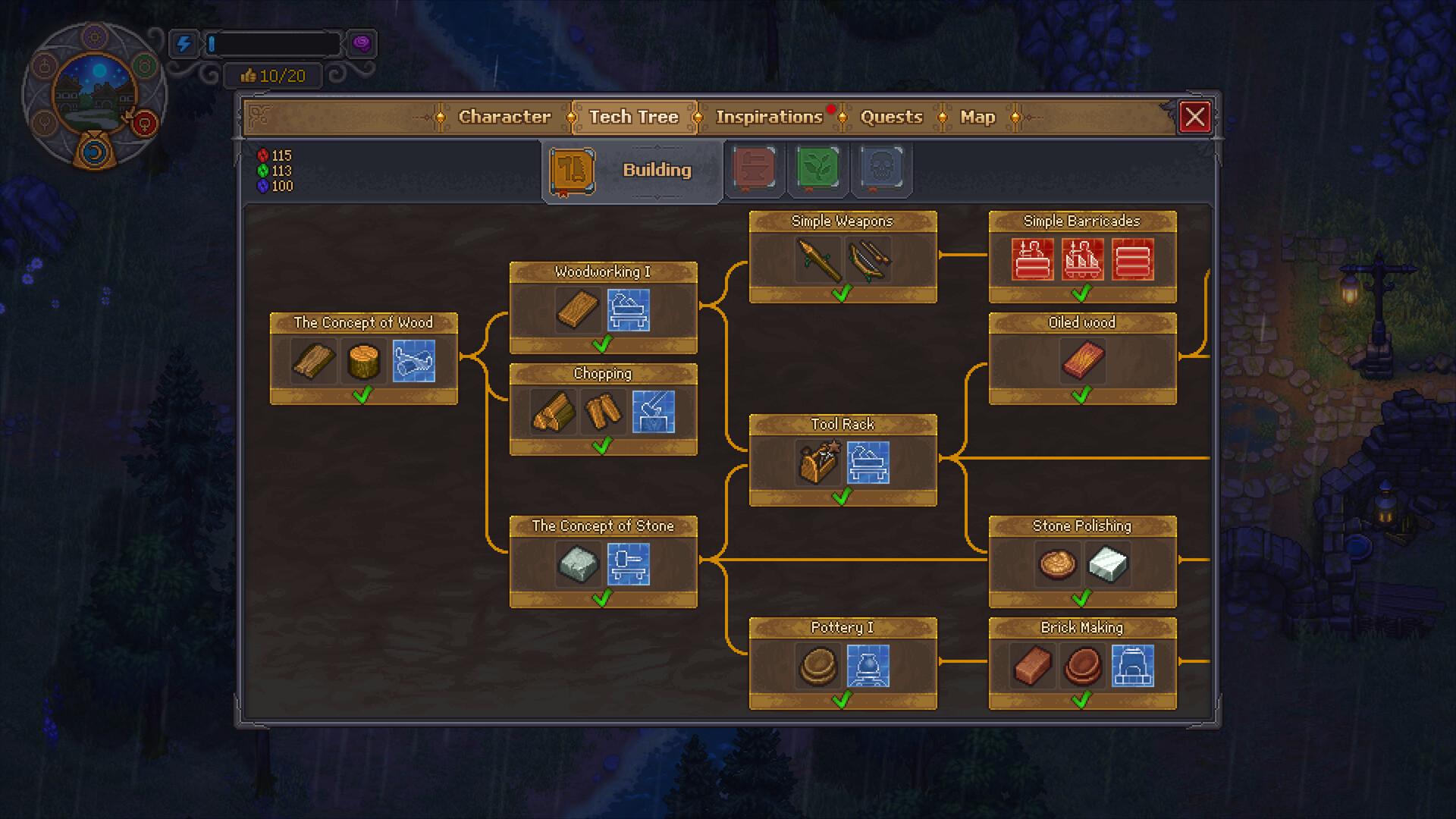
Quests now sit in a flowchart menu, with each branch showing who wants what. That was my biggest complaint about the first game, where I spent far too long wandering between villagers trying to work out what to do next. You move faster too, and fast travel means the walk into town no longer eats a quarter of the day.
Every line of dialogue is voiced now, in a spread of regional British accents that suit how rude the writing is. There's a Voiceover Mode option that swaps the acting for mumbling, and I can't think of a reason to use it.
And the zombies are in the base game. Breaking Dead was the DLC that rescued Graveyard Keeper, and the sequel builds its whole second act around the same idea.
+ PROS
- Zombie conveyor automation in the base game, no DLC needed
- Tech points come in fast enough to use the tree
- The quest flowchart and fast travel fix the first game's worst chores
- Fully voiced, with a cast that sells the jokes
- Every distraction still counts as progress
− CONS
- The first few hours are the same manual grind
- Combat is one button and three weapons
- The quest list swamps you and later systems go unexplained
- Cutscenes can't be skipped and saves are limited
- Struggles on Steam Deck and the original Switch
I have bronze nails and no idea why
Here's a normal hour in Graveyard Keeper 2. I start building a workbench and go looking for planks. On the way I spot a mushroom and pick it, and by the time I'm home I've forgotten the mushroom and the workbench. A villager gives me a quest, so I take it. I open my backpack to make room and find a stack of bronze nails I have no memory of collecting.
I've since learned that bronze nails drop out of broken barrels when you hit them with an axe, and I hit everything with an axe. That one item sums up the whole game. Every system hands you something, and every something goes into a recipe you haven't unlocked for a quest you haven't started.
Every system hands you something, and every something goes into a recipe you haven't unlocked for a quest you haven't started.
The forgetting works because whatever I wandered off to do still counts. The mushroom goes into a recipe eventually. The quest pays out in something the workbench needed. By the end of a session my base has grown in five directions and I couldn't tell you which of them I planned, and I like that a lot more than a tidy daily checklist.
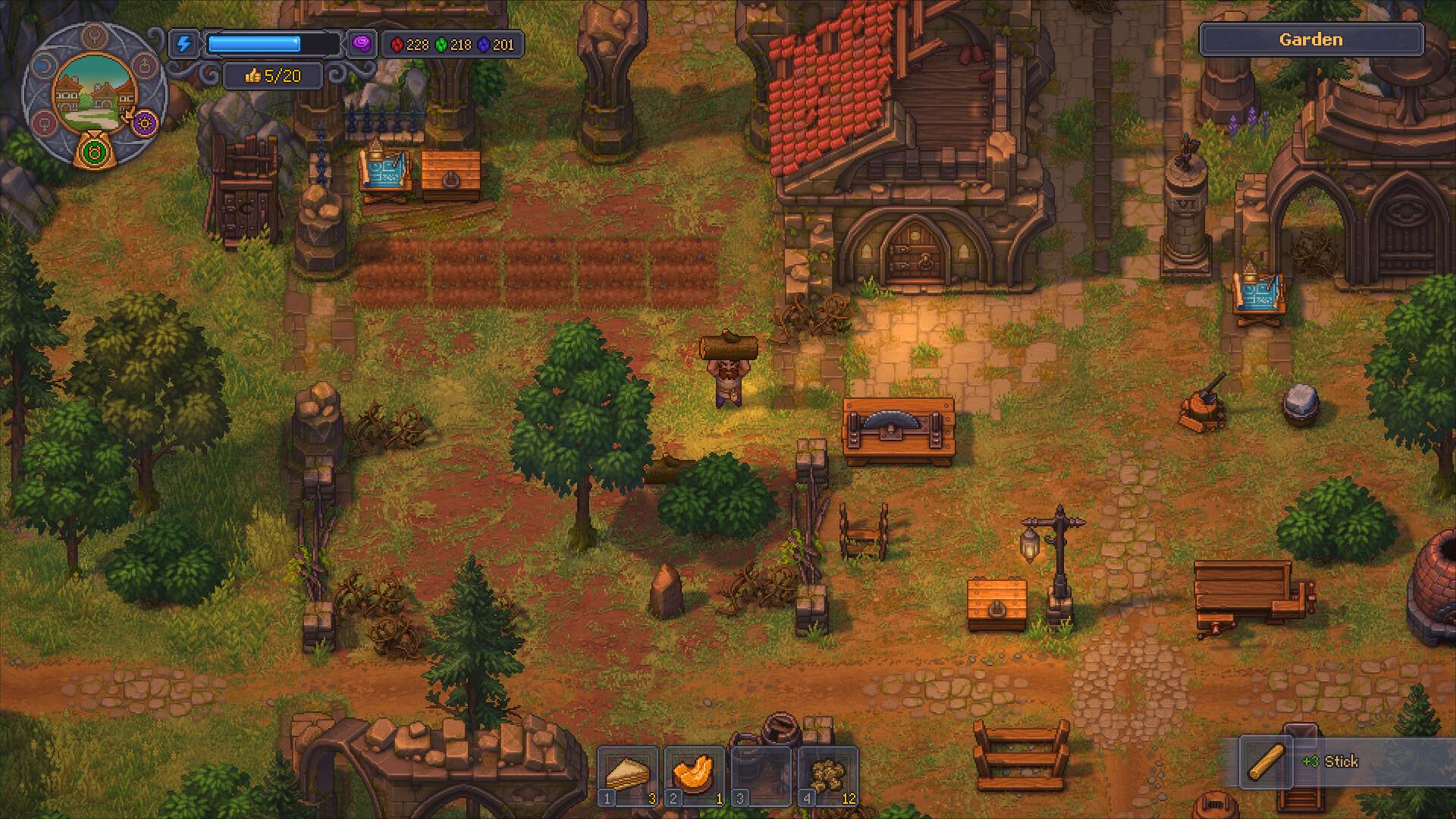
Still a grind, with better tools
None of this makes Graveyard Keeper 2 a relaxing farming game. The first few hours are the same manual labour as the original. You carry every log on your shoulders and saw every plank yourself, and the crafting chains run deep. Bronze nails come from bronze scrap, which comes from picking through junk, and nearly every early building wants nails.
The energy bar still runs out and the day still ends too early. I'd get two jobs into a list of six and the sun would be going down.
The difference is that this grind has an end. In the first game automation arrived late, in a DLC, and felt like a patch. Here it's the point of the second act, so every log I carried felt like a down payment on never carrying one again.
Zombies on the payroll
Once the zombie side of the tech tree opens up, you raise workers, put them on stations and link the stations with conveyor belts. Ore goes in one end of a line and ingots come out the other while the Keeper is off doing something else. The first time a line runs without you is the moment the whole game clicks.
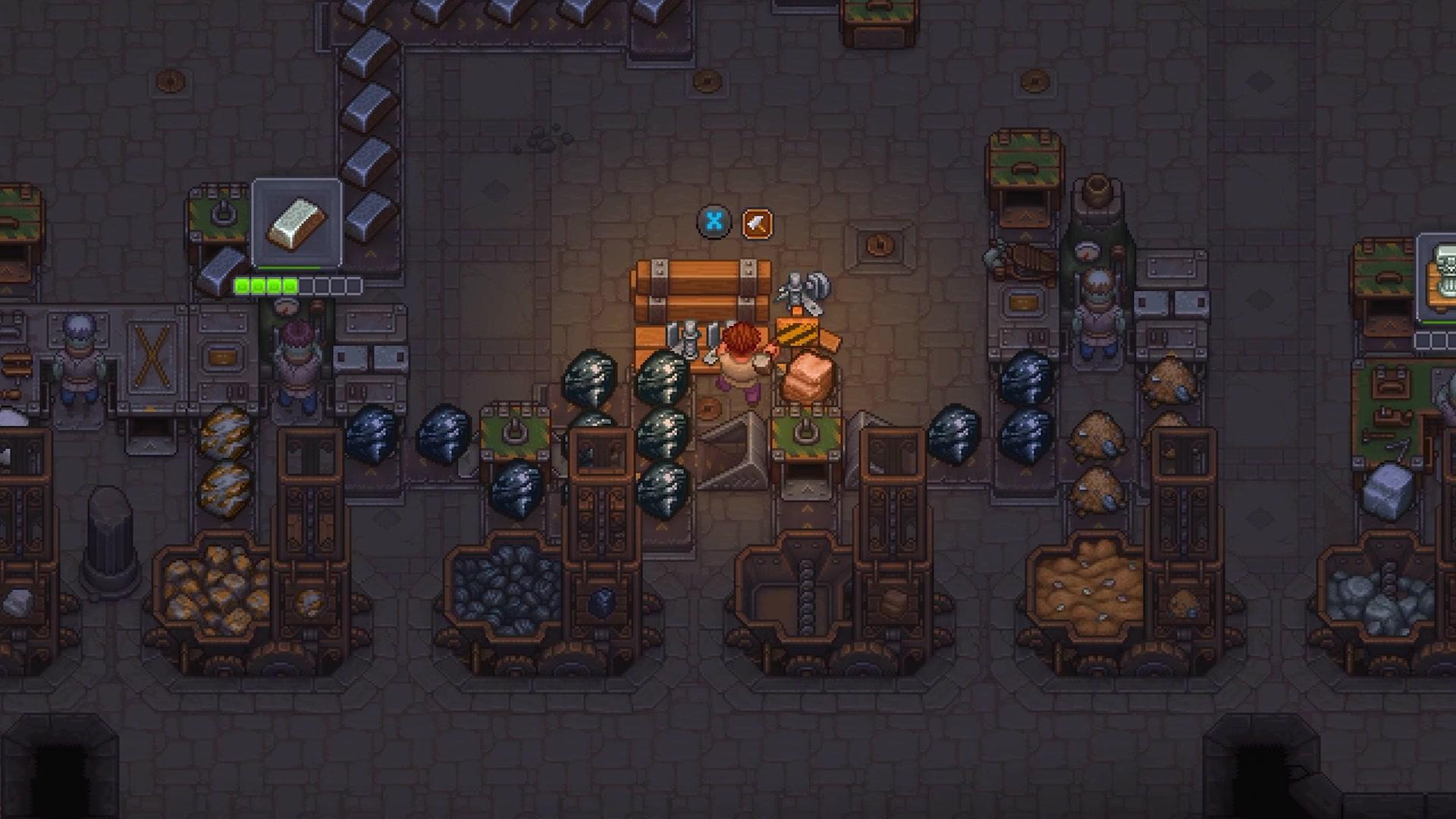
It scratches the same itch as a factory game in a much smaller space, with harvested hearts, bones and skin among the raw materials. The Steam page promises you can turn zombie labour into 'a scalable and profitable operation', and it's the funniest line of marketing copy I've read all year, because it's accurate.
Grand Inquisitor, part-time general
The other big addition is the town. Zombies have overrun it, and rebuilding means clearing the streets, restoring a vegetable stand, a tailor, a furniture maker and an alchemist, and then charging the residents for everything. The store page tells you to 'milk its residents for maximum profits', and the game means it.
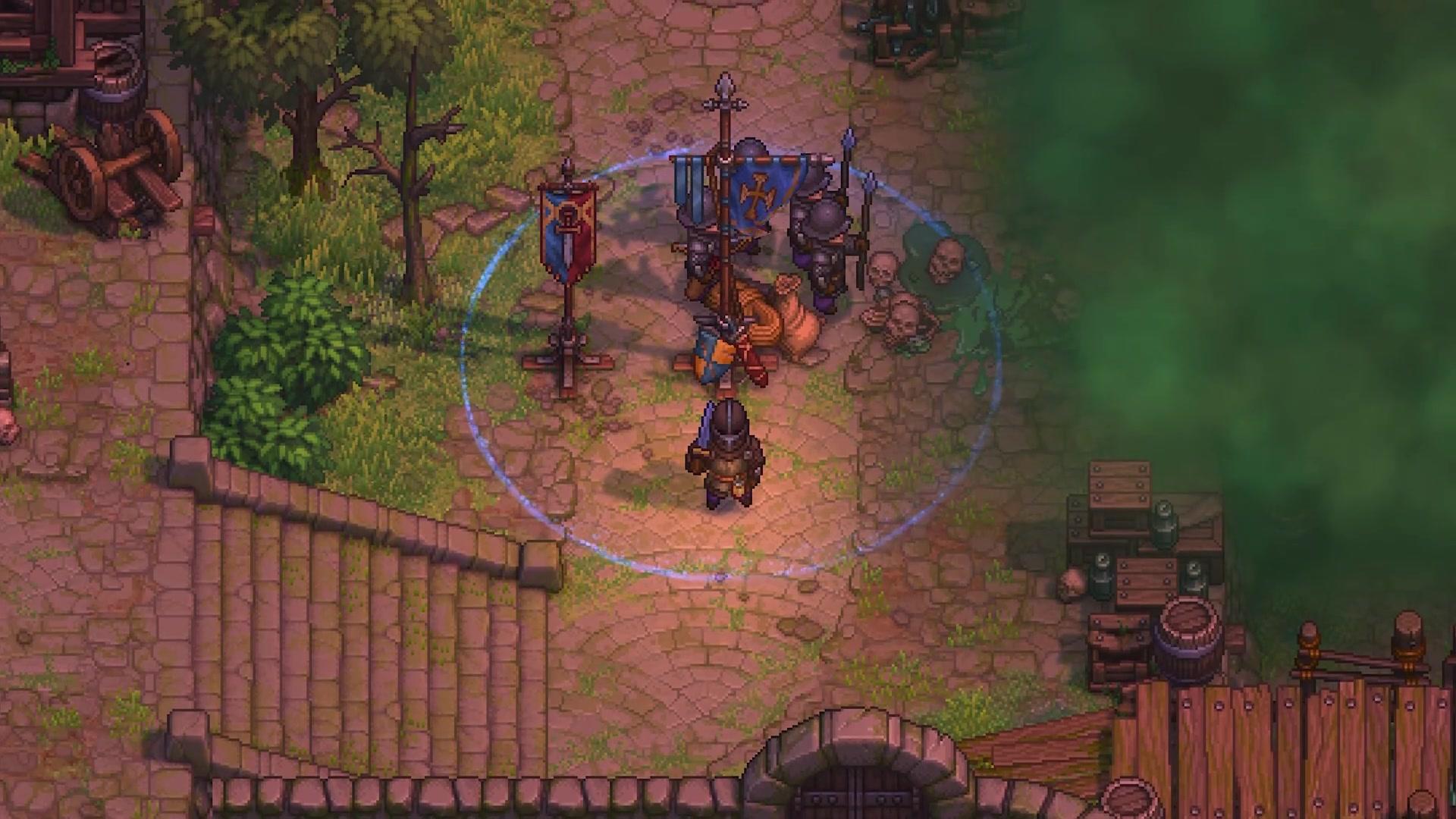
Defending the town is a light tower defence layer. You put up barricades and towers, arm your not very bright troops and rally them around a banner while the undead come at you in waves. Combat is one attack button and three weapon types, which makes it the thinnest system in the game. The fights are over in a few minutes, though, and then you're back at the conveyor belts.
Where it still trips
The pile of things to do is the appeal, and it's also a problem. By the end of my first in-game week the quest flowchart had more open branches than I could keep in my head, and nothing tells you which ones matter. The early tutorials are good. They stop explaining things right around the point the systems get complicated.
Cutscenes can't be skipped or paused, which gets old fast when a production line is waiting, and the save options are limited. Performance is the bigger worry. Steam Deck HQ measured frame rates dipping into the mid-30s in open areas on Deck and recommends a 30fps cap, and Analog Stick Gaming found the original Switch version slow and choppy. If you have the choice, play it on PC or a current console.
Watch the trailer
Verdict
Graveyard Keeper 2 is the sequel my 7.5 review was asking for. It fixes the tech point shortage and puts automation in the base game where it belonged, and the quest tracker means I always know exactly what I'm ignoring. It's still a grind and the combat is thin. Starting four jobs, finishing a fifth and finding bronze nails in my backpack is the most fun I've had with a management sim this year. At A$34.95 on Steam (US$24.99) it's an easy recommendation for anyone who liked the first game, and a better place to start for anyone who bounced off it.

PLAYER COMMENTS
LOADING...