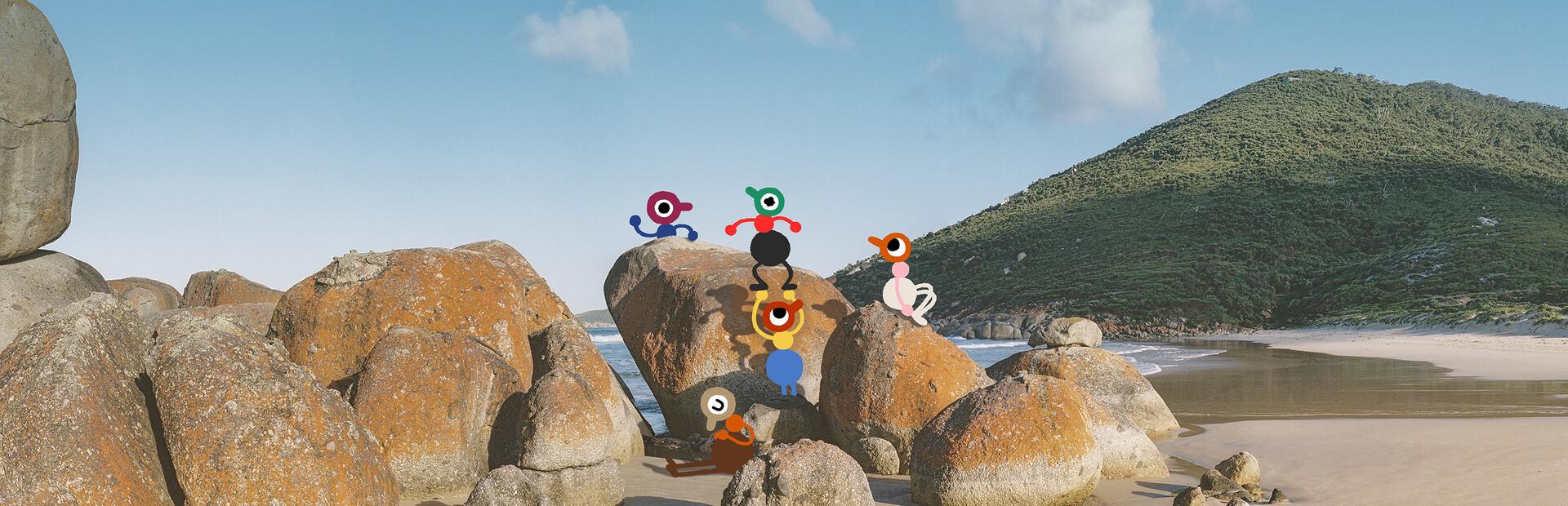
▶ TL;DRBig Walk is the best co-op game I have played since Portal 2, and it gets there by making conversation the mechanic instead of a thing you do over the top of one. The catch is real: you need at least one other person, a mic, and an evening where nobody bails. Round up three friends and go.
Most co-op games treat voice chat as plumbing. It sits outside the game, in Discord, doing the work the design could not be bothered doing. Big Walk pulls it inside and builds the whole thing on top of it, and the result is the first multiplayer game in years where I finished a session hoarse.
The mechanic is your voice
Voice is positional. Your friends get quieter as they wander off, muffle when a rock face gets between you, echo in a tunnel, and crackle into static when the walkie-talkie is doing the carrying. That sounds like a technical flourish until you are two ridges apart trying to describe a symbol on a wall, and the game has quietly turned distance into a resource you have to manage.
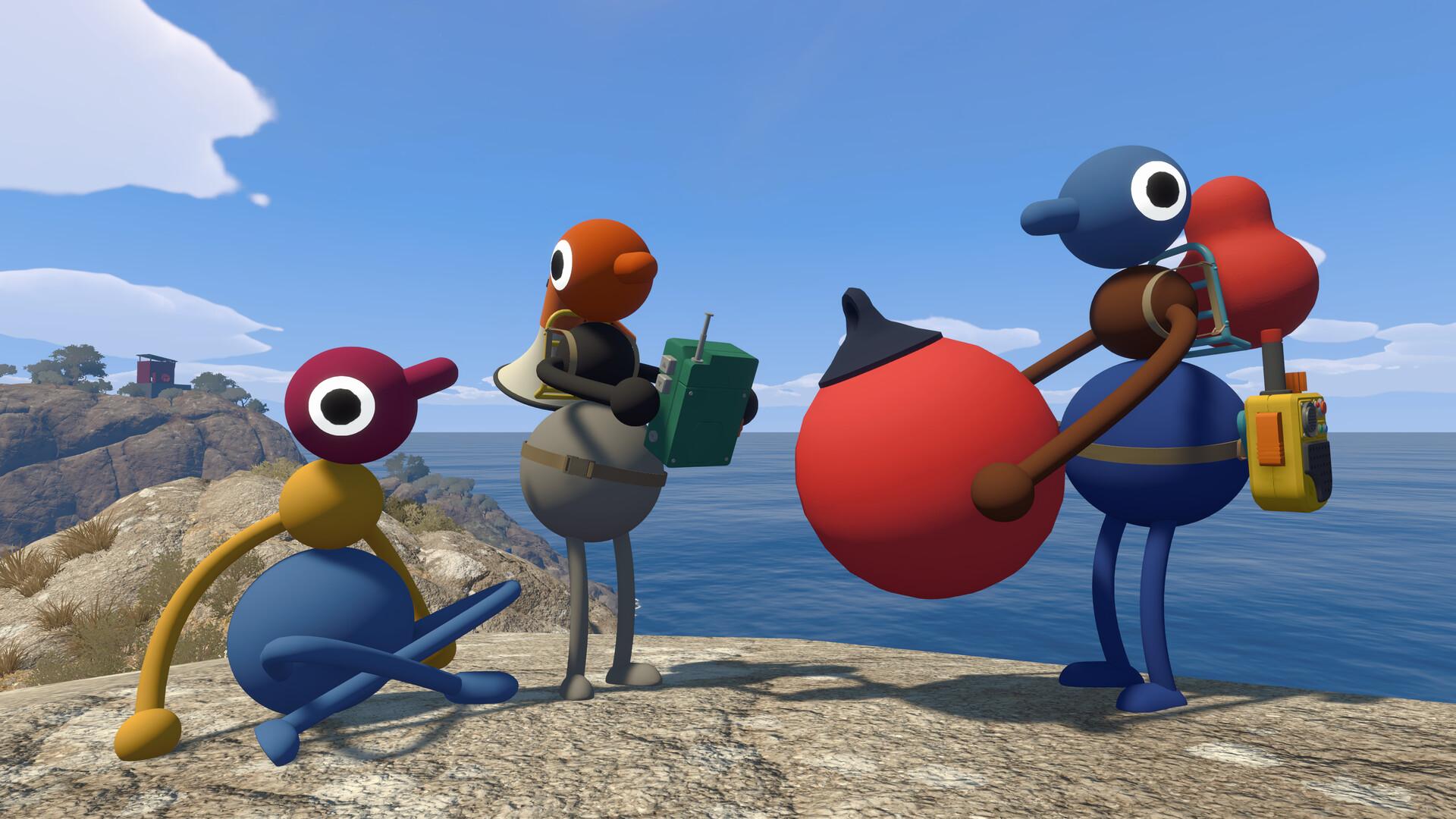
The toolkit follows the same logic. Walkie-talkies, a megaphone, fireworks to fire off when you are separated, binoculars, and maps that are useless unless somebody reads them out loud. None of it solves a puzzle for you. It just extends how far your voice can reach, which means the moment-to-moment loop is a group of people constantly negotiating who goes where and who stays in earshot.
+ PROS
- Positional voice chat is the puzzle mechanic, not a feature
- Puzzles that only function because a real person is on the other end
- Scales from two players to twelve without collapsing
- Genuine Australian bushland, rendered with obvious affection
- It has an ending, and the ending is earned
− CONS
- No solo mode at all, and no way to enjoy it with silent strangers
- Two player runs drag; four is the sweet spot
- Everyone needs a working mic and the patience to actually use it
- Once the post-game challenges are done there is little reason to reopen it
- The Switch 2 version is the weakest place to play it
Puzzles that need a person on the other end
The puzzles come in three broad flavours. Physical ones, where bodies and weight matter and four of you end up hanging off each other like a novelty keyring. Timing ones, where somebody has to call the beat. And information ones, where the answer is split across two places and neither person can see both halves. That last category is where Big Walk does its best work, because it cannot be brute forced. Someone has to describe a thing accurately to someone who cannot see it, which turns out to be a skill most of us are much worse at than we think.
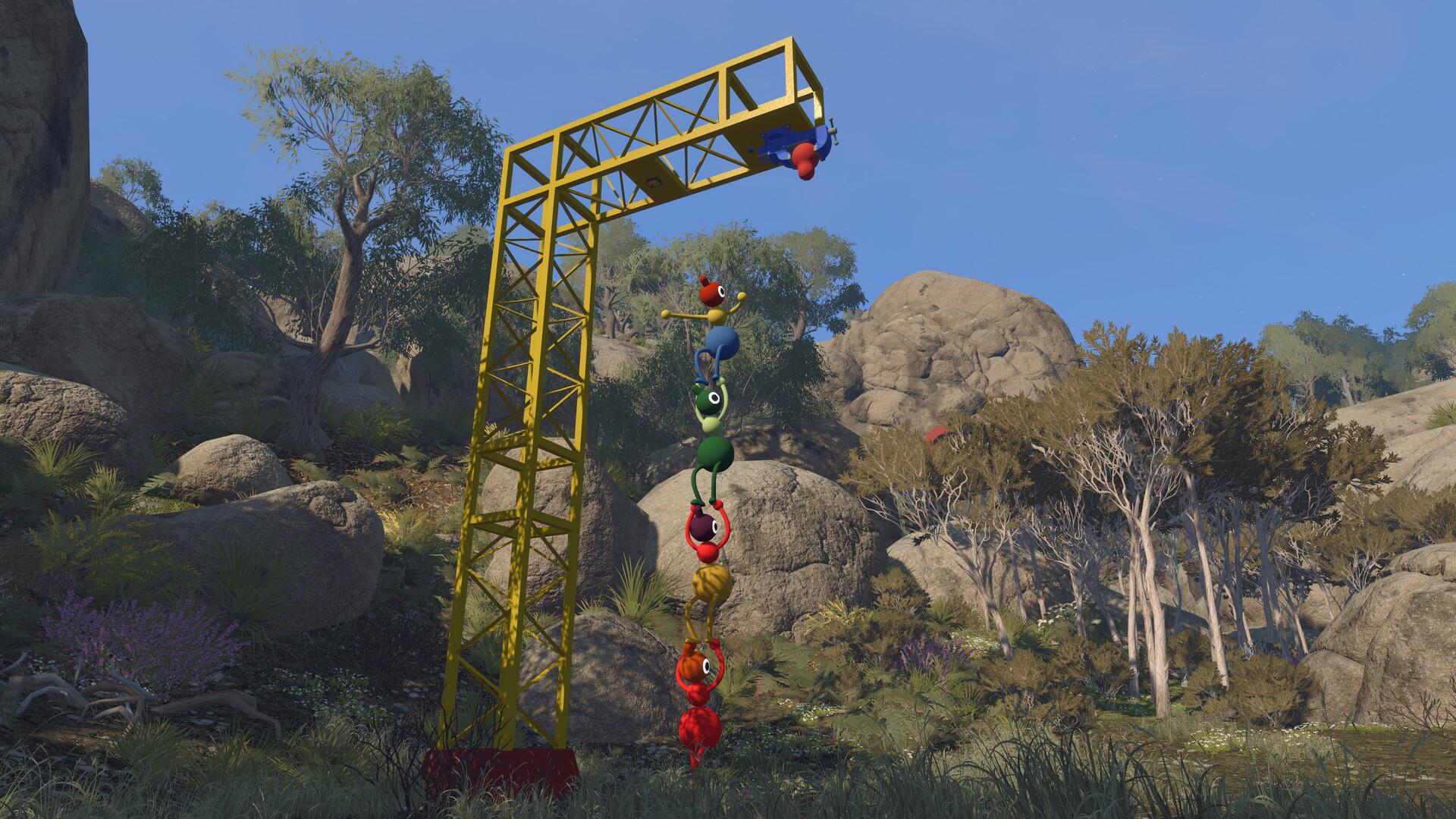
Failure costs nothing, which is the right call. Nothing is lost when a puzzle goes wrong, so the group experiments instead of arguing about whose fault it was. Solving things also opens up the world in a permanent way: map rooms, trains, shortcuts, all of it making the next crossing shorter than the last. The pacing sneaks up on you. Three hours in, the walk that used to take ten minutes takes one.
The best co-op game I have played in years is one where the main verb is talking.
The bit where it takes your words away
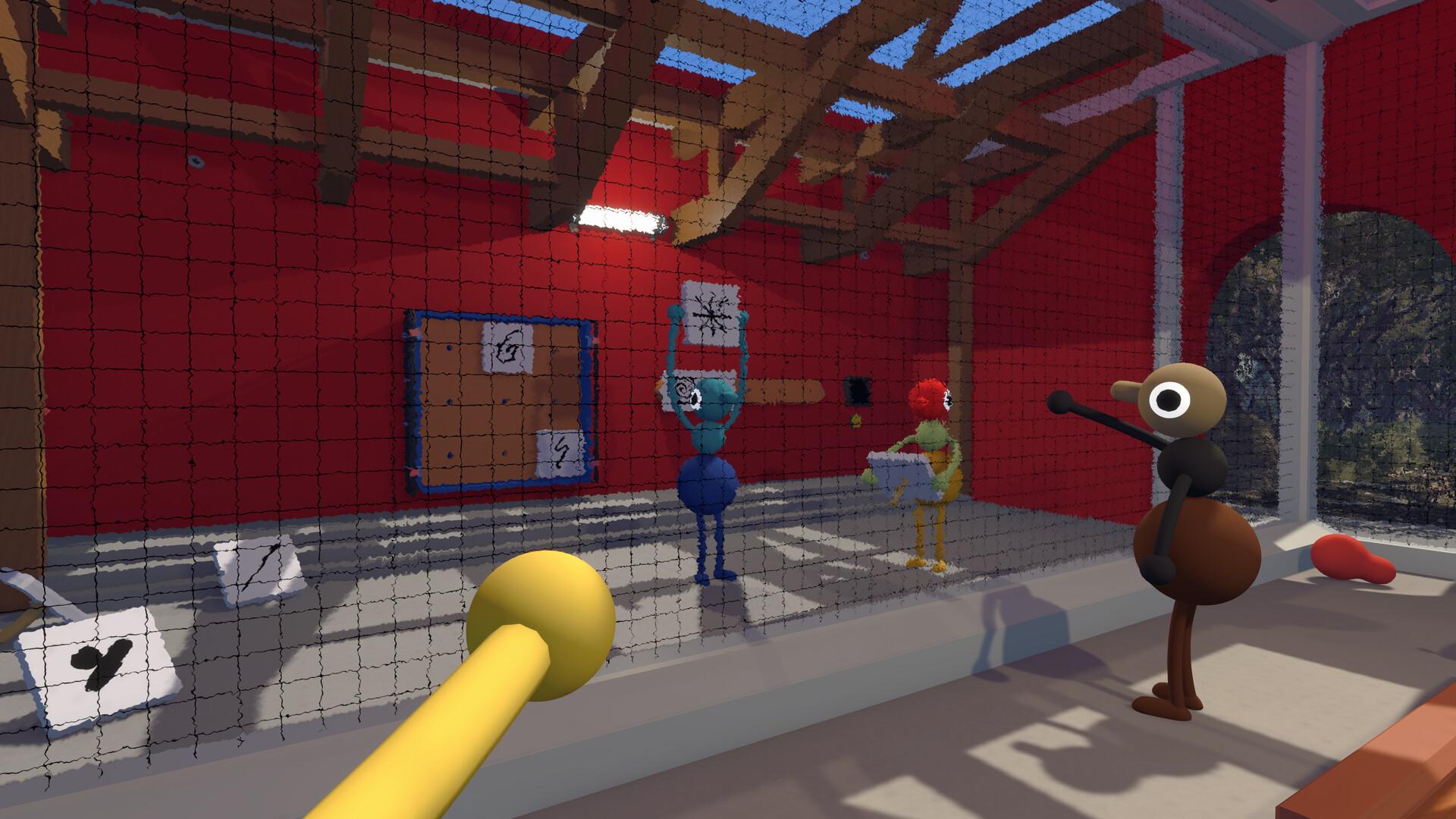
At some point the game removes your speech. You keep the puzzles, you lose the language, and you are left holding up scraps of paper with symbols on them, miming, and inventing a code on the spot with people who are inventing a different code at the same time. It is the funniest twenty minutes I have had in a game this year and also, structurally, the smartest thing in it: every convention your group built up over the previous hours suddenly has to be rebuilt from nothing.
It looks like Australia because it is Australia
House House is a Melbourne studio and the world is modelled on Wilsons Promontory, which anyone who has done that walk will clock within about thirty seconds. Orange lichen on granite boulders, tea tree scrub, that specific dry grass. The environments are rendered with a realism that sits strangely against the characters, who are one-eyed blobs in primary colours with limbs like pipe cleaners. The clash works. The bush is the straight man.
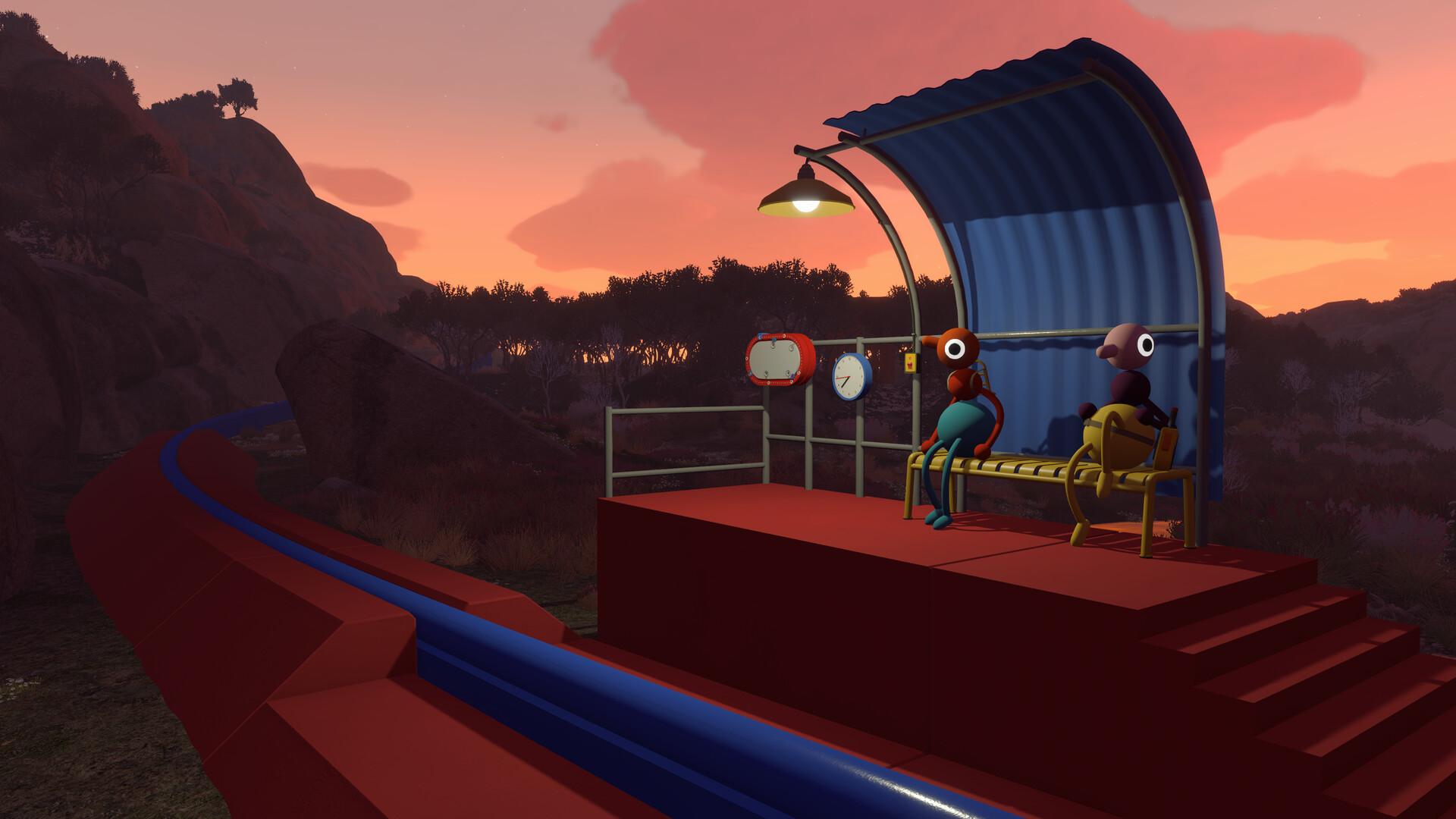
It is also patient in a way multiplayer games usually are not. There is no timer, no round, no score. If half the group wants to sit on a rock and watch the sun set while the other half kicks a mate's binoculars into the ocean, the game waits. That dead time is where the hanging-out actually happens, and cutting it would have cost the game most of its charm.
The catch
There is no solo mode. Not a reduced one, not a bot-assisted one. Two players is the floor, twelve is the ceiling, and four is the number where the puzzles feel designed rather than stretched. A two player run takes eight to ten hours and drags in the middle stretches, where a bigger group would be splitting up and covering ground. Everyone also needs a mic that works and the willingness to talk, which quietly rules out the friend who always types.
Longevity is the other honest flaw. Finishing unlocks a set of harder challenges, and once those are done the world has nothing left to withhold. Fifteen to eighteen hours for everything, then it is finished forever, because the trick a puzzle plays on you only works once. Worth the A$29.50 (currently discounted), but do not buy it expecting the Thursday-night fixture it briefly looks like.
Platform matters here too. The critical reception has been near-unanimous, with Metacritic sitting at 91 for PC against 75 for Switch 2, and that gap lines up with what the game asks of a machine: a big open world, twelve simultaneous voice streams, and audio that has to model distance and occlusion in real time. If you have the choice, play it on PC or PS5.
Watch the trailer
Verdict
House House could have made Untitled Goose Game 2 and everybody would have bought it. Instead they spent the years since on a game about talking to your friends in a national park, and it is the most convincing argument for co-op design I have seen in a long time. The requirements are the requirements: two people minimum, mics on, one evening where nobody bails. Meet them and this is a 9. Ignore them and it is a refund.

PLAYER COMMENTS
LOADING...