
▶ TL;DRFate of the Vaal represents Path of Exile 2 continuing to find its footing during early access. The Druid is an unqualified success – mechanically deep, visually impressive, and unlike anything else in the ARPG space. The league mechanic had a bumpy start but shows promise after rapid iteration. GGG's willingness to patch aggressively based on feedback demonstrates the advantages of early access development, even if it means some rough launch experiences. With the endgame overhaul still on the horizon and more classes yet to come, Path of Exile 2 remains a work in progress – but an increasingly impressive one.
The Druid Class: A Shapeshifter Done Right
The Druid is Path of Exile 2's first Strength/Intelligence hybrid class, and it's easily the most ambitious shapeshifter implementation in any modern ARPG. Where other games force you to commit to a single animal form, PoE 2's Druid seamlessly transitions between human spellcasting and three distinct beast forms mid-combat.

How Shapeshifting Works
The new Animal Talisman weapon type is the key to transformation. Equip one, pick your preferred animal form (Bear, Wolf, or Wyvern), and using your basic attack instantly shifts you into that creature. There's no downtime, no awkward animation locks – you're casting Volcano as a human one moment and mauling enemies as a bear the next.
The Three Forms
Bear Form is the bruiser fantasy brought to life. Generate Rage through the Maul attack, then spend it on devastating slams with Fury of the Mountain and Rampage. The ultimate skill, Walking Calamity, surrounds you in a fiery storm while generating even more Rage. Bear form can also socket any Warcry gem through Ferocious Roar – including Ancestral Call, which literally transforms you into the Karui war god Kaom. Yes, really.
Wolf Form is built for speed and cold damage. The Pounce attack marks enemies, and killing marked targets summons wolf minions to your pack. Lunar Blessing temporarily transforms you into an Arctic Werewolf with enhanced movement and attacks, and you can extend its duration by consuming Rage from Bear form – encouraging builds that swap between animals.
Wyvern Form is the surprise standout. This dragon-esque creature balances melee talon slashes with ranged fire breath, powered by Power Charges generated from devouring corpses. Rolling Magma spits bouncing fireballs that synergize with human-form Volcano spells, while Flame Breath lets you hover and rain fire across the battlefield like an actual dragon.
Ascendancies: Shaman and Oracle
Shaman is the elemental devastation path. The Apocalypse node triggers a rain of fire, ice, and lightning after dealing enough elemental damage, while Wisdom of the Magi unlocks exclusive modifiers on Runes and Idols.
Oracle is mechanically unique and demands precise play. Fateful Vision shows a ghostly clone performing one of your skills – mimic it for bonus damage. Converging Paths creates exploitable enemy clones when targets become vulnerable to Freeze, Stun, or Electrocution. And Unseen Path unlocks 130 entirely new passive nodes representing "alternate futures" – essentially giving Oracle Druids access to skills and nodes no other build can reach.
Game director Jonathan Rogers called the Druid "the hardest class we've ever designed," and it shows. The combo potential between forms, the spell-to-animal synergies, and the unique resources for each transformation create an incredibly deep system that rewards experimentation.
+ PROS
- Druid class exceeds expectations with seamless shapeshifting
- Three distinct animal forms each feel complete and viable
- Oracle ascendancy offers genuinely unique mechanics
− CONS
- League mechanic rewards felt underwhelming at launch
- Temple decay system can feel punishing
The Fate of the Vaal League: Build Your Own Dungeon
The league mechanic draws clear inspiration from PoE 1's Incursion, but with meaningful improvements. Throughout your adventure, you'll encounter Vaal Beacons that corrupt nearby enemies. Activate six beacons to open a portal to the Vaal Ruins – an ancient temple you'll construct piece by piece.
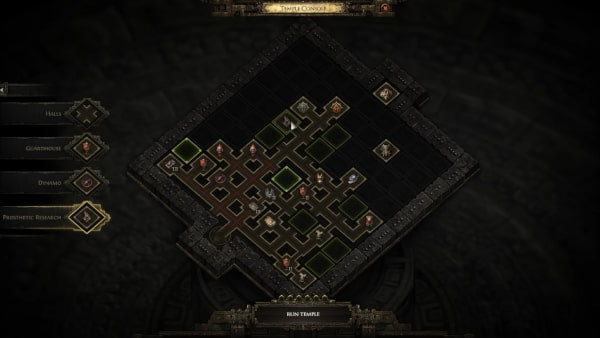
The Temple-Building System
Inside the Temple Console, you place six room tiles onto a grid, connecting them with paths to build your dungeon. Rooms range from basic Path tiles to specialized chambers:
- Sealed Vaults contain crafting materials and resources
- Guardhouses spawn monsters and crafting workbenches
- Locus of Corruption lets you corrupt already-corrupted items (50% chance to brick them entirely)
- Surgeon's Symphony features the Transcension Device, where you can replace your limbs with Vaal mechanical prosthetics for powerful stat bonuses (lost on death)
Room placement matters. Adjacent rooms can upgrade each other through tiers, with Tier III rooms offering the most powerful rewards – including exclusive crafting options and enhanced loot. However, upgrading rooms also increases difficulty with global modifiers that buff monsters throughout your run.
The Architect and Atziri
After Act 3, you can challenge the Temple Architect, a boss that spawns randomly on your dungeon map. Defeating them grants access to Xipocado's Console, which lets you place three exclusive reward rooms – but completing the Architect destabilizes much of your temple, destroying rooms and forcing you to rebuild.
The ultimate goal is reaching Queen Atziri herself, the new Pinnacle boss. She appears at the height of her power before the fall of the Vaal civilization, and defeating her drops powerful unique items like Atziri's Rule, which grants the Mirror of Refraction skill.
Initial Reception and Patches
Here's where things get complicated. At launch, many players felt the temple rewards didn't justify the effort, particularly in endgame. The decay mechanic that destroys rooms after each run felt punishing, and the six-beacon activation requirement slowed down gameplay.
GGG responded quickly with patch 0.4.0c, roughly a week after launch:
- Room modifier bonuses approximately doubled at all tiers
- Tier III rooms now spawn additional powerful enemies for better loot
- Endgame temple encounters now drop reward chests instead of ground loot
- Crafting bench accessibility improved (currency can be taken after Act 3)
- Spawn rates for high-value crafting stations increased at higher levels
Content creator Zizaran noted that while the changes were positive, there's concern about rewards leaning too heavily toward Tier III rooms. Community suggestions continue to roll in – accessing temples from hideouts instead of during maps, reducing beacons from six to three, and increasing general loot throughout.
What Else Changed in 0.4.0
Balance and New Content
- Over 90 skills rebalanced (mostly buffs)
- 30 new Support Gems, including the game-changing Spell Totems meta gem
- 250 new Passive Skills on the tree (plus 130 more via Oracle's Unseen Path)
- 21 Lineage Gems reworked
- 10+ new Unique Items
- 8 new Lineage Supports exclusive to endgame
Abyss Goes Core
Rise of the Abyssal from the previous league is now a permanent mechanic, appearing in specific campaign areas starting in Act 2 and summonable in endgame maps via waystones.
Cruel Difficulty Removed
GGG replaced the Cruel difficulty spike with three new temporary interludes – side stories that bridge you to level 65 where endgame begins. This smooths out progression significantly.
Performance Improvements
CPU-bound players should see at least 25% higher frame rates thanks to multi-core optimization. Frame spikes in heavy gameplay situations are also significantly reduced. Note: GPU-bound players won't see improvements; they should use Dynamic Resolution instead.
The Endgame Question
One important caveat: the major endgame overhaul originally planned for 0.4.0 was pushed to patch 0.5.0. Jonathan Rogers admitted during the reveal stream that "the scope was just a bit too large." For returning players who've already exhausted endgame content, Fate of the Vaal offers incremental improvements – monster density changes, magic find adjustments, Atlas tree updates – but not the transformative endgame redesign many were hoping for.
The endless Atlas remains polarizing. Some players love the lack of direction; others find it aimless compared to PoE 1's structured progression. GGG has signaled awareness of this feedback, but significant changes are months away.
Should You Play?
If you're new to Path of Exile 2: Absolutely. The free weekend (Dec 12-15) is the perfect time to try the game, and the Druid is an excellent starter class with diverse playstyles. The four-act campaign is now complete enough to provide 40+ hours of content before endgame.
If you're a returning player: The Druid alone is worth coming back for. It's genuinely one of the best shapeshifting implementations in the genre. The Fate of the Vaal mechanic is more hit-or-miss depending on your tolerance for resource management and temple planning, but post-patch improvements have smoothed out the roughest edges.
If you're burned out on endgame: Consider waiting for 0.5.0. The endgame content drought is real, and Fate of the Vaal doesn't fundamentally change the mapping loop.
Reviewed on PC. Path of Exile 2 is currently in paid Early Access with a planned free-to-play launch in 2026.
Life Meets Pixel is an independent gaming publication. We don't accept sponsorships or PR access – all games are purchased or played during free promotional periods.

PLAYER COMMENTS
LOADING...