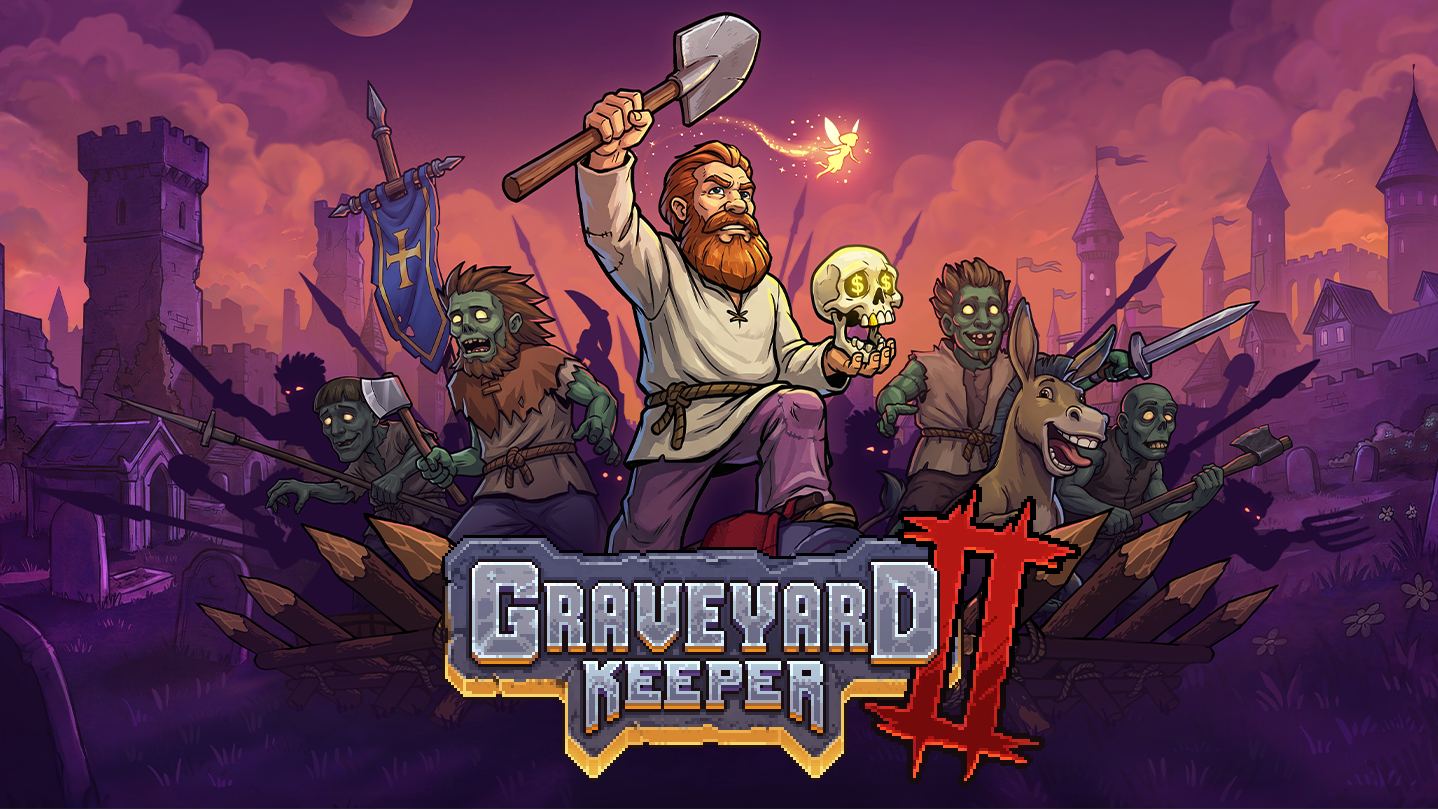
Steam still lists a single word where Graveyard Keeper 2's release date should be: 2026. No month, no quarter, no window beyond the year. What Lazy Bear Games and tinyBuild have actually shown of the sequel, though, is specific enough to argue about, and it is a much bigger swing than the average sim follow-up.
What the Sequel Is Actually Adding
The 2018 original cast you as a medieval undertaker with flexible ethics and a very profitable corpse supply. We reviewed it as Stardew Valley’s goth cousin, and the joke held up longer than it had any right to. The sequel promotes you. The Steam page opens with "You are the Grand Inquisitor now!" and the feature list runs: manage the graveyard, automate production, lead a zombie army into battle, fortify the town, rebuild it, and milk the residents for profit.
Steam has it filed under Adventure, RPG, and Simulation, single-player, Windows only for now, with full controller support. Lazy Bear develops, tinyBuild publishes, same as last time. We covered the original announcement back in April, when the reveal landed at the Triple-i Initiative Showcase. Four months on, the store page has screenshots rather than promises, and they change the read.
The Automation Loop Is the Whole Argument
The first game had a dense crafting tree and no way to delegate any of it. You walked. Every plank, every brick, every embalming fluid meant a round trip between benches, and the back half of the game was mostly logistics performed by one man with a shovel.
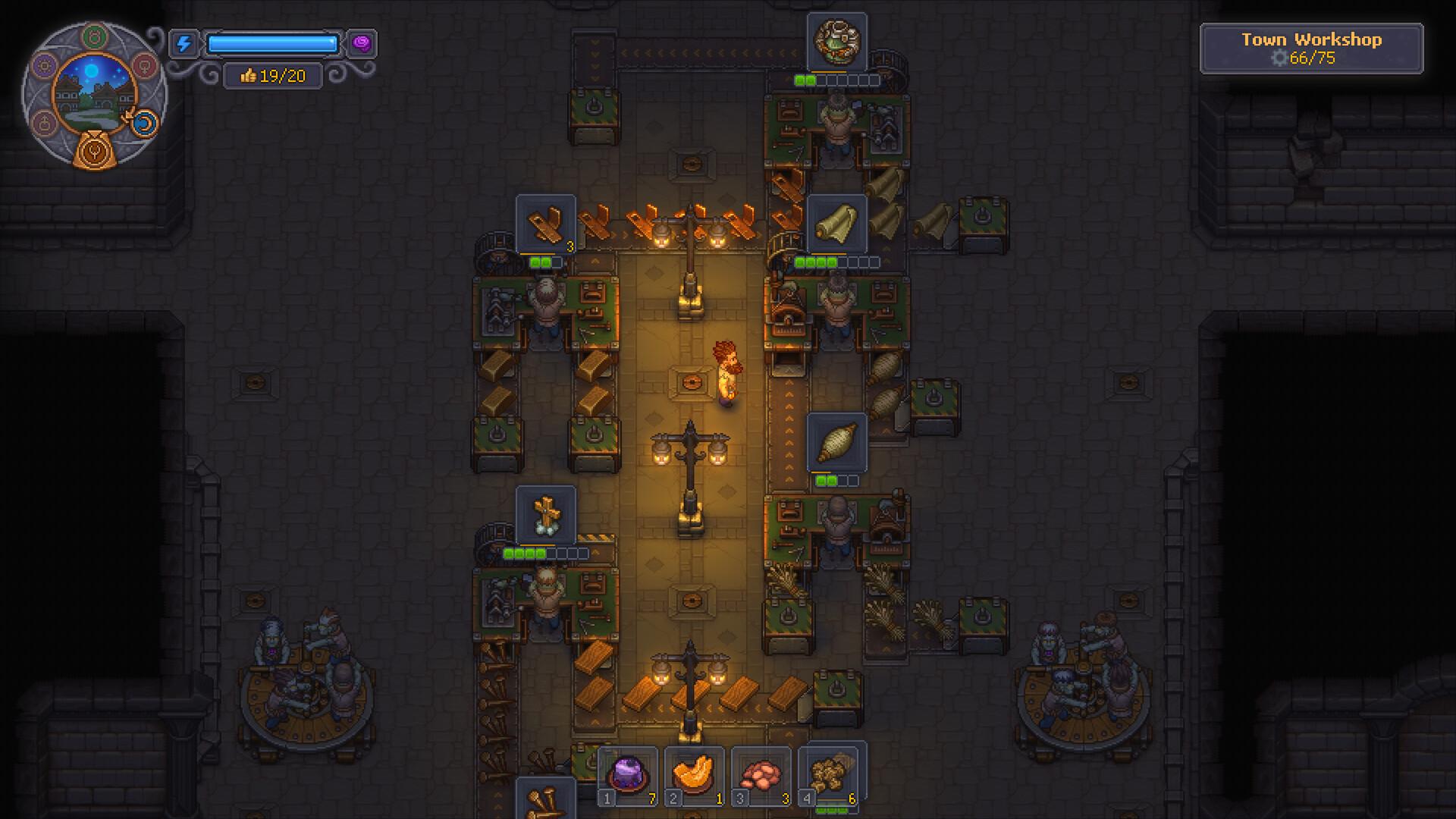
The Town Workshop screenshots answer that directly. Benches are staffed by undead workers with their own progress bars, treadmill wheels turn in the corners to drive the room, and production moves without you standing on top of it. There is a build-placement mode too, with a grid, rotation, and valid or blocked tiles, which is factory-game furniture rather than farm-sim furniture. If the sequel gets this right, it fixes the exact thing that made the original’s endgame a chore: the walking.
The Town, and the Army You Point at It
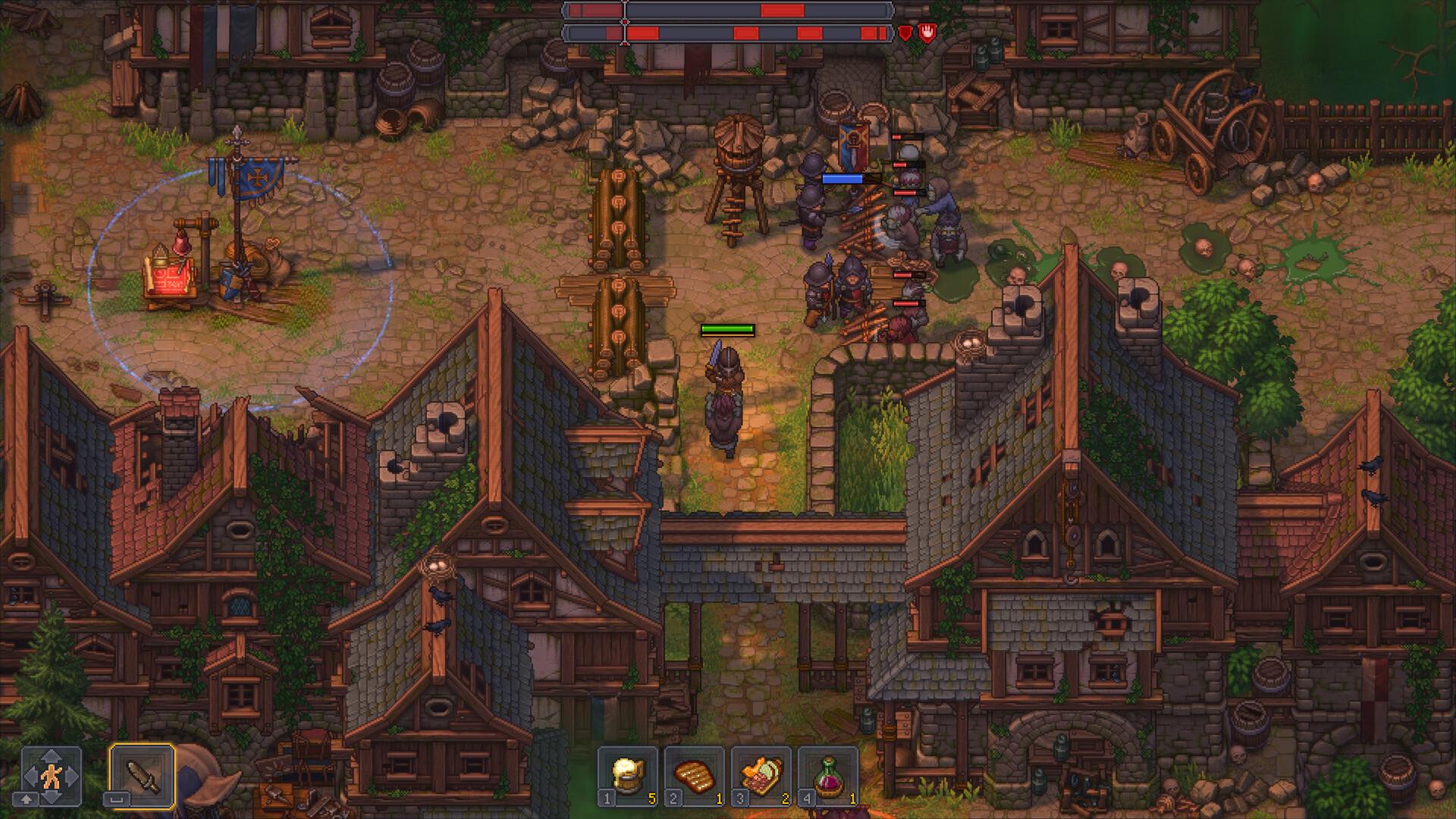
The other half of the pitch is a defence layer. Screenshots show armoured units holding a barricade line against undead attackers, a banner planted inside a glowing radius, and a wave health bar across the top of the screen. Elsewhere the town gets rebuilt piece by piece, down to a half-finished ship in the port district. That is a lot of new verbs for a series whose combat was previously its weakest system by a wide margin.
This is where the scepticism belongs. Automation and tower defence can feed each other beautifully: your production line arms the wall, the wall protects the production line. They can also sit side by side without touching, in which case one of them becomes the part you tolerate to get back to the other. Nothing shown so far settles which it will be.
What We Want It to Fix
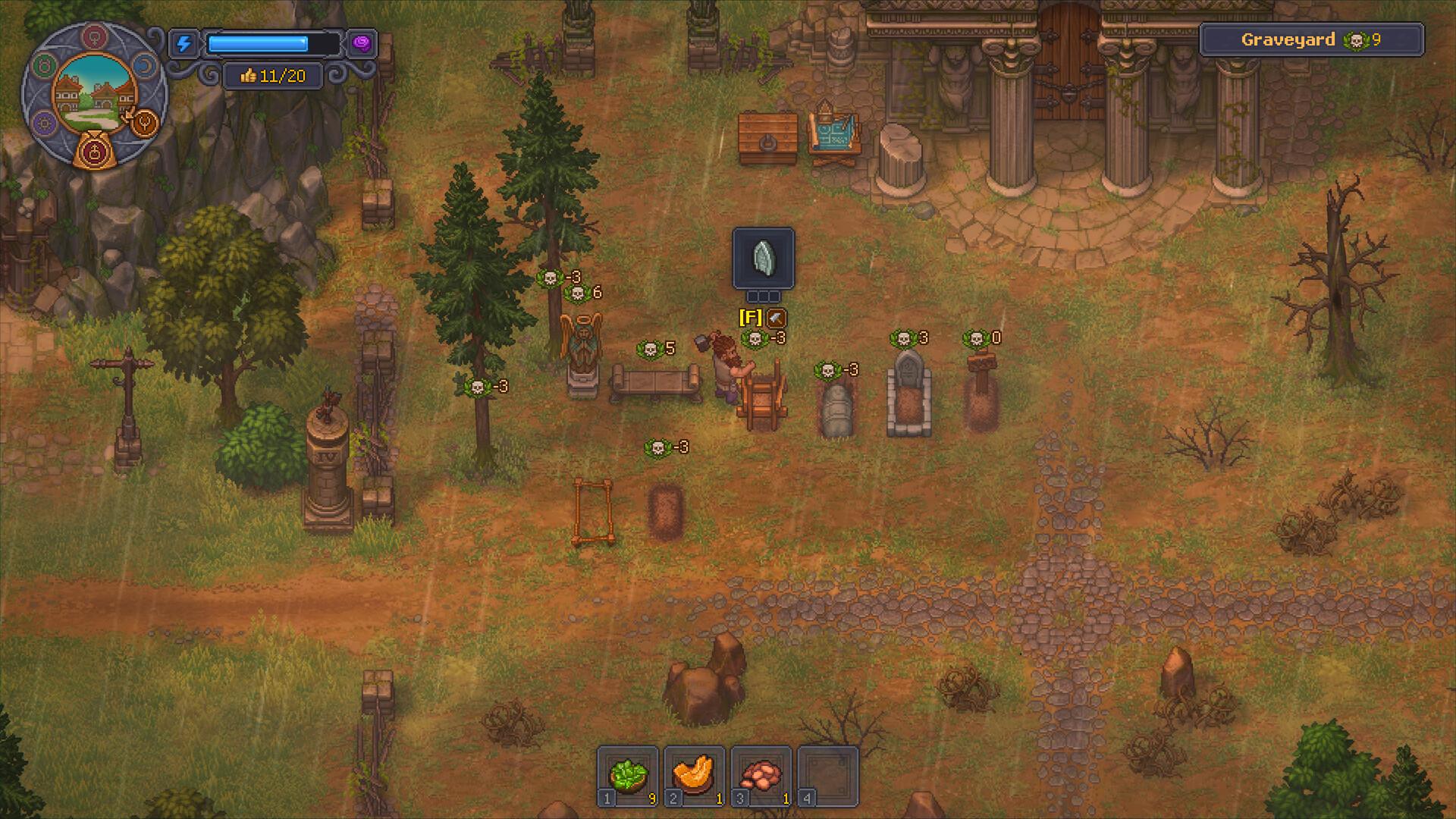
Grave quality is clearly still scored per plot, skulls floating over each headstone the way they did in 2018. Fine. The problem was never the scoring, it was everything wrapped around it: tech unlocks gated behind three colours of resource you could not plan for, NPCs who only appeared on specific days of a custom calendar, and quest chains that effectively required a wiki tab open beside the game. A sequel that automates the labour but keeps the opaque scheduling has fixed the boring half and left the frustrating half alone.
The honest summary: the systems on show are the right systems, the art is a clear step up, and the studio has earned trust on tone. Whether it holds together is a question about integration, not ambition, and no store page can prove that. Steam says 2026 and nothing more precise.
PLAYER COMMENTS
LOADING...