▶ TL;DRYNAB(You Need A Budget) is a genuinely helpful starter-friendly money system wrapped in a very readable, practical book. It won’t magically fix your finances for you but it will give you a clear, realistic framework that you can immediately apply to your life. For beginners or anyone feeling lost with budgeting, this is an excellent place to start. For people who already track their money or have a solid budgeting habit, the concepts may feel simple… but still grounding, and worth reflecting on. Overall, it’s a solid, practical guide that helps you understand not just how to budget, but why your priorities matter.
I still remember the first time I ever had to manage money. I was about twelve. My father stood my brother and me by the door as he was leaving for work, handed me 5,000 won (about $5) and my brother 3,000 won, and said, “This is your allowance for the next two weeks. Write down how you spend it, or you won’t get more next time.”
So, with a brand-new notebook my mum bought for me, I started tracking every little chocolate bar, sticker, and snack I bought.
My dad didn’t check the notebook every time… but the habit stuck.
When I received my first salary years later, the habit changed shape but stayed with me. Regular pay meant I could track my monthly patterns - how much went to food, to fun, to savings. It felt natural.
Then I moved to Sydney… and everything got expensive.
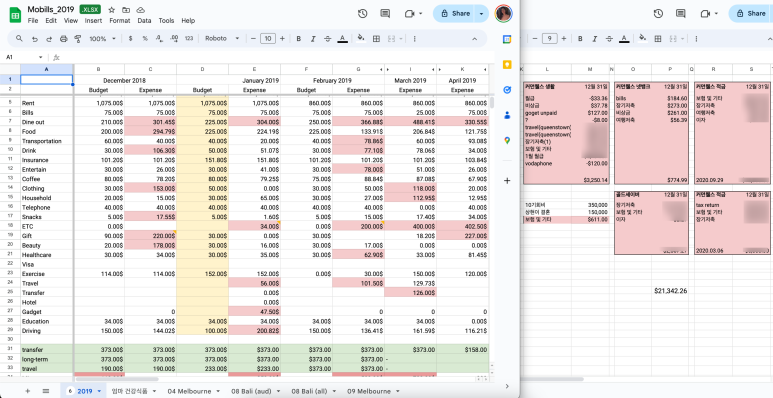
I was job-hunting, money was tight, and suddenly my neat little system didn’t work anymore. My expenses were messy, unpredictable. I created spreadsheets for monthly spending, spreadsheets for savings goals, spreadsheets for different bank accounts… At the beginning and end of every month, I spent ages organising everything.
And when I started living with my partner, managing our shared money with my old complicated system wasn’t going to work.
That’s when we found YNAB.
And why the book caught my attention
I started using the YNAB app first, just to try it. At first glance, it seemed like just another budgeting app - but it wasn’t. It worked completely differently from what I was used to.
Then I learned the creator had a book, You Need A Budget by Jesse Mecham, and… of course I had to read it. If I was going to use the system seriously, I wanted to understand the philosophy behind it.
Priorities, Opportunity Cost, and Giving Every Dollar a Job
The book’s main message is simple but powerful: Budgeting is really about priorities. Not what you should value, but what you actually value.
It starts with knowing your real fixed costs. Rent, bills, groceries - those aren’t negotiable. But the rest? That money should be assigned a purpose based on what matters to you.
If you earn $2,000 and your fixed costs are $1,000, the remaining $1,000 should reflect your value ranking:
- Someone who loves family time might budget for gifts or outings
- Someone who prioritises hobbies will fund their hobby category
- Someone dreaming of a holiday will allocate money toward travel
It’s not about restricting yourself. It’s about choosing intentionally.
And what I found interesting is how much emphasis the book puts on predictable but irregular expenses. Things like:
- car rego
- vet emergencies
- annual subscriptions
- maintenance fees
- even “just in case” categories like health or pet care
These are the things that always catch people off guard… unless they budget for them monthly.
+ PROS
- Real life examples you can actually copy
- Packed with practical and realistic tips
- Have a ready-to-use budgeting app
− CONS
- The content may feel basic or familiar
- The YNAB system can feel a bit strange or rigid at first
- The book only works if you actually apply the method
How YNAB has actually helped us for 2+ years
Using the app long-term has made so many things easier:
1. Saving for our house deposit: Once we decided our first home, we needed to save the remaining 10% deposit. I entered the deadline and total amount, and YNAB told me exactly how much to set aside each month. No panic, no surprise.
2. Pet emergency fund: I allocate $100 every month. Last year, when my cat fought with another cat and needed the vet - no stress. The money was already waiting.
3. Annual subscriptions: Instead of paying $120 at once, I assign $10 each month. When the bill comes, it’s already covered.
4. Planning special-occasion dining: My partner and I love going to nice restaurants for birthdays and celebrations.
We budget for it monthly, so even “special months” stay stable.
But of course, the system isn’t magic. Sometimes the amount I need to spend + the amount I want to spend is more than my actual income.
When that happens, YNAB forces me to confront my real priority list. It’s uncomfortable but necessary.
Opportunity cost becomes very real: Is $70 better spent on Friday night pizza?Or saved toward a holiday? Or used for something long-term?
There’s no right answer - just what aligns with my values right now.
About the book itself
The book isn’t difficult, and because I’ve been budgeting since childhood, a lot of it wasn’t completely new to me.
But if you:
- struggle with credit card debt
- have no idea where your money disappears
- want to start saving but can’t
- want a budgeting system that actually works in real life
Then you’ll find the book extremely helpful. The later chapters also cover:
- budgeting for couples
- financial communication in relationships
- how to teach children about money
I appreciated the real examples and how simply everything was explained.
Looking ahead
This year, we want to invest in another property.
That means new fixed costs - rates, management fees, tax - and big life events coming up too: the wedding, family visits, home improvements…
My budget will definitely evolve, but the principles stay the same. And knowing that makes me feel grounded and calm.

If any of you readers want to try YNAB, here’s my referral link - you’ll get an extra free month after the trial, and I’ll get one too 💛 (Thank you in advance!)

PLAYER COMMENTS
LOADING...