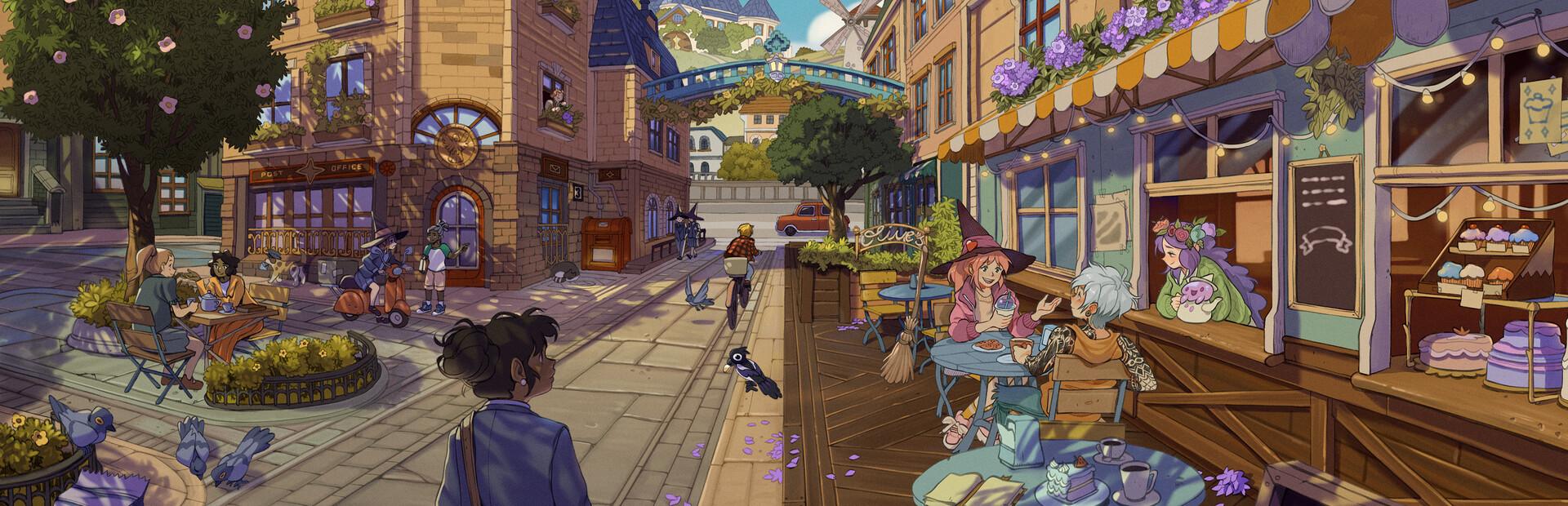
Witchbrook does not have a release date. The Steam page says "2026" and stops there. That has not stopped it climbing to number 10 on Steam's most-wishlisted chart, wedged between Resident Evil Veronica and ILL, which is a strange place to find a game about doing your herbology homework.
A decade in the making
Witchbrook is a witch-college life sim set in Mossport, a seaside city where you enrol at Witchbrook College, take classes and try to graduate. It is co-developed by Chucklefish and Robotality, and published by Chucklefish, the studio behind Starbound and the publisher that first put Stardew Valley in front of people. It was teased as Project Spellbound in 2016 and given its current name in 2017, so anyone who has been waiting has been waiting a long time.
In October 2025 the studio pushed the game off its Winter 2025 target. In a development update posted to Steam, Chucklefish wrote:
Originally we had planned to launch Winter 2025, but despite great development progress this year, we've made the difficult decision to shift the release into next year.
The window has not narrowed since. Steam still lists 2026, with no month attached, and Chucklefish has said a date will come when it is ready rather than before.
The Stardew-shaped hole
The wishlist ranking makes more sense when you look at what is not being made. Stardew Valley is eleven years old and still the default answer whenever somebody asks for a game about building a small life somewhere pleasant. The genre has no shortage of farming sims. It has very little with the density of hand-written characters that made Pelican Town stick.
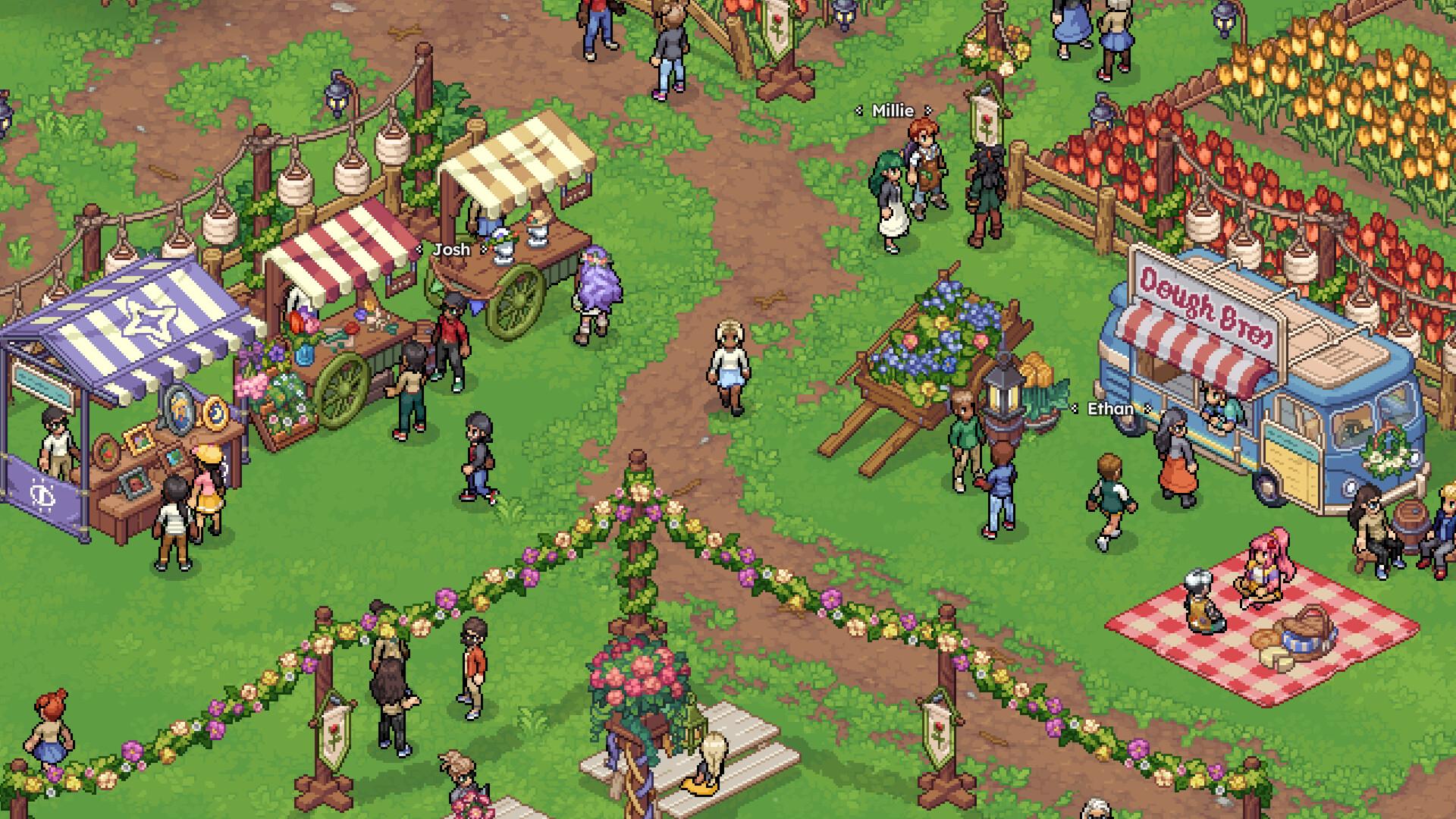
Witchbrook is aimed squarely at that gap, and its answer is a city rather than a village. Chucklefish's pitch is cityfolk with individual daily routines, seasonal community events, and shops that decorate their own windows when winter arrives. The studio says every character has a schedule: working a shift, drinking at the pub, cramming for an exam in the college library. It is the Stardew formula with the population turned up and a magic school dropped in the middle.
What Chucklefish has actually shown
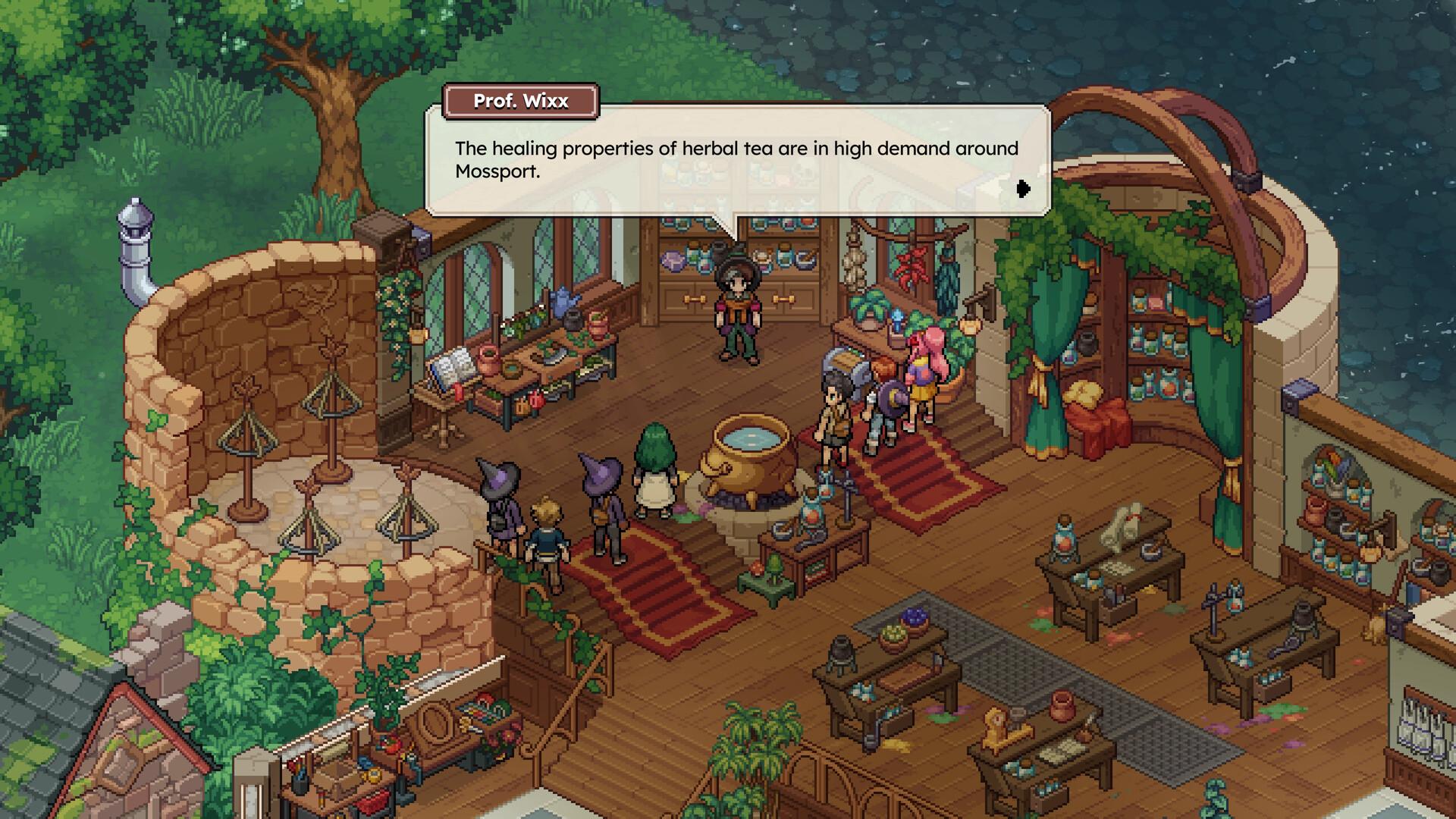
The June 2026 dev blog is the most detailed look so far, and it reads less like a farming sim than a timetable. You inherit your aunt's cottage, then discover classes are not cheap, so a cottage familiar named Fable sets you up in a witch business. Townsfolk order goods, your classes decide what you are able to make, and you deliver across the city on a moped until you have earned your broom licence.
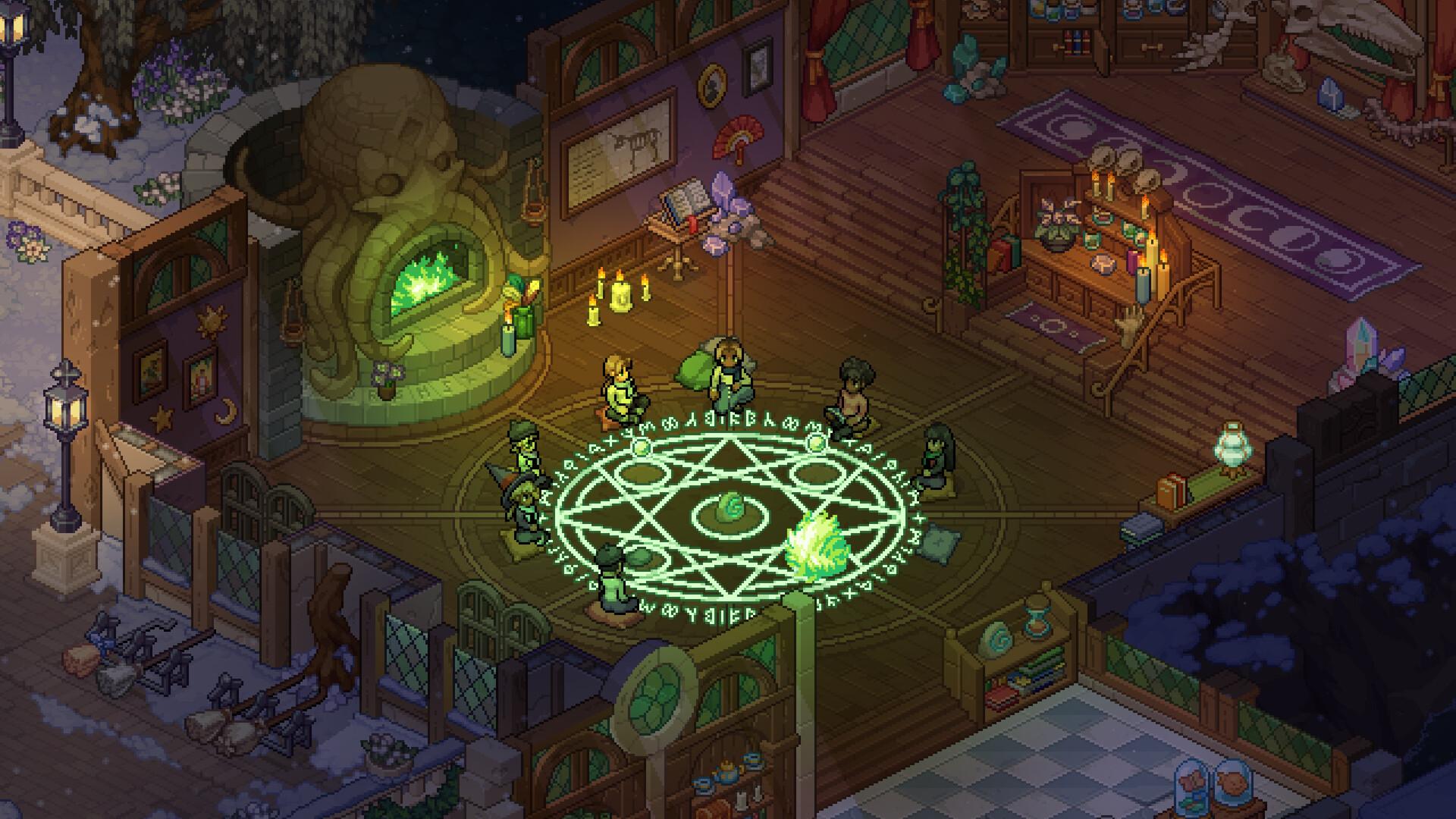
Those classes run from tea, incense and salves early on to potion brewing, astrological divination and arcane rituals later. Assignments send you into Mossport to consult a resident, work out what they need and go and make it. The merits you earn buy entry to exams, and your marks depend on a knowledge collection that fills in as you find a herb, grow it repeatedly and borrow the right library book. There is even a wellbeing meter that rises when you pet a dog or walk somewhere green, and falls when you stay up too late or upset a friend.
That is a lot of interlocking parts, and it goes some way to explaining the wait. Chucklefish also let slip a number worth sitting with: playing through a single in-game year takes roughly 40 to 50 hours depending on playstyle, and the game runs across several years, through graduation and past it.
Up to four witches
Co-op is the part most likely to decide whether this lands. Up to four players share Mossport online, racing brooms through the park, practising spellcraft or just loitering. Stardew Valley's multiplayer arrived a year and a half after launch and always felt slightly bolted on. Designing for four from the beginning is a different problem, particularly when every resident of the city is running a schedule of their own.
Our take
A wishlist rank measures anticipation, not quality, and this one has been accumulating since 2017 without anybody outside the studio playing the game. There is no demo and no press build. Every screenshot above is a screenshot Chucklefish chose.
What reassures me is the shape of the dev blogs. They are not mood pieces. They explain how the knowledge collection gates your exam marks, and why localisation is taking as long as it is, which is the sort of detail a team writes when the systems already exist and the work is tuning them. The isometric pixel art is genuinely lovely, and the interface in these shots looks considered rather than merely decorated, which is not a given in this genre.
The risk is the obvious one: a game this systemic can be charming in a screenshot and a chore by hour thirty. Chucklefish says it is running repeat playtests specifically on pacing, which is at least the right thing to be worried about. Until there is a date or a demo, "2026" is all anyone has, and I would not be planning around the first half of it.
PLAYER COMMENTS
LOADING...